Handling Criticism Calmly: Listen, Clarify, Respond
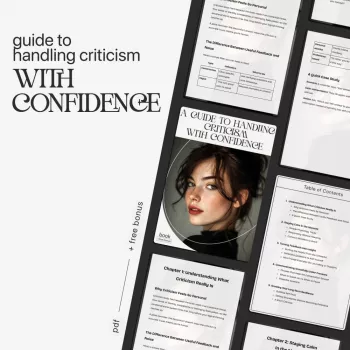
Handling Criticism with Confidence: Stay Calm, Listen Clearly, Respond Well
Criticism can feel personal even when it’s useful. Building the skill to hear feedback without spiraling, shutting down, or snapping back makes communication clearer and relationships steadier. The goal isn’t to “love” criticism—it’s to stay grounded long enough to understand what’s being said, decide what’s true, and respond in a way that protects your boundaries and keeps the conversation productive.
Why criticism hits so hard (and why it doesn’t have to)
Criticism often triggers the brain’s threat response. Even mild feedback can register as danger, pushing the body toward defensiveness, shutdown, or counterattack. That’s why a simple comment can suddenly feel like a verdict on your worth.
Confidence isn’t the absence of discomfort; it’s the ability to stay present while the discomfort passes. One of the fastest ways to reduce shame is to separate identity from behavior: “I did something that didn’t work” lands very differently than “I am the problem.” That shift keeps you flexible and makes improvement possible.
It also helps to remember that not all criticism is equal. Some feedback is genuinely useful and actionable. Some is subjective preference (“I like it done this way”). Some is manipulation or control (vague attacks, moving goalposts, threats). Each category deserves a different response.
The calm-first method: what to do in the first 10 seconds
The first moments after criticism often determine whether the conversation escalates. A brief pause can prevent reactive wording that you’ll later need to clean up.
- Pause before responding. Even one breath creates space between trigger and reaction.
- Reset the body. Unclench your jaw, drop your shoulders, and exhale longer than you inhale to downshift arousal.
- Name the emotion silently. Labeling (“embarrassed,” “angry,” “worried”) reduces intensity and gives you more choice.
- Pick a micro-goal. Choose “understand,” “clarify,” or “set a boundary,” rather than “win.”
If the stress response feels hard to interrupt, a short daily grounding routine can make these in-the-moment skills easier to access. The Simple Daily Rituals to Soothe Your Mind – Digital Guide is designed for quick practices that build steadier emotional regulation over time.
Listen like a communicator: clarify before you defend
When criticism arrives, the impulse is to explain yourself. A calmer and more effective path is to collect specifics first. That turns vague discomfort into usable information—and it also reveals when the feedback is more about tone, preference, or power than facts.
- Ask for specifics. What happened, when, and what impact did it have? Avoid debating generalizations like “you always” or “you never.”
- Reflect the core message. “So you’re saying X happened and it led to Y?” Confirming understanding reduces misfires.
- Request an example and an alternative. “What would ‘good’ look like next time?” makes expectations visible.
- Separate content from tone. If delivery is harsh, address the point first, then circle back to delivery if needed.
Quick questions that turn criticism into usable information
| Goal | Question to ask | What it prevents |
|---|---|---|
| Clarify facts | What specific moment are you referring to? | Arguing about vague impressions |
| Understand impact | How did that affect the project/you? | Missing the real concern |
| Find expectations | What were you hoping I would do instead? | Guessing what “better” means |
| Confirm priority | Is this the most important issue to fix first? | Trying to fix everything at once |
| Protect boundaries | Can we focus on the behavior rather than personal labels? | Character attacks and shame spirals |
Choose a response style that fits the situation
Once you understand the feedback, choose a response that matches what’s actually happening.
Scripts for calm, confident communication
Handling criticism in common settings
Work
Confirm priorities and define what “success” looks like. Ask for a follow-up check-in so improvement can be measured, not guessed. Resources like Harvard Business Review’s guidance on receiving feedback can help normalize the idea that feedback is information, not identity.
Relationships
Public or group feedback
Online criticism
Decide whether the relationship matters. If it does, respond once, briefly, and factually. If it doesn’t, disengage. Emotional regulation skills matter here too; the American Psychological Association’s overview of emotion regulation explains why naming and managing feelings changes what you’re able to choose next.
Self-criticism after feedback
Practice plan: build the skill without forcing perfection
If criticism spikes anxiety in unfamiliar environments—like airports, new cities, or group travel—having a clear plan for safety and decision-making can reduce overall stress and make conversations easier. The Solo Traveler’s Guide to Staying Safe (Digital Download) is a practical checklist-style resource that supports calm, prepared choices on the go.
Digital guide to support emotional intelligence and calm communication
For ongoing support, the Simple Daily Rituals to Soothe Your Mind – Digital Guide offers small, repeatable practices that fit into real days and help you return to center faster.
For more on what makes feedback effective (and easier to accept), the Center for Creative Leadership’s research on feedback is a helpful reference.
FAQ
How can criticism be handled calmly when it feels unfair?
Pause for a breath, ask for specifics and examples, and reflect back what you heard before responding. Then state your facts and boundaries without debating character judgments or getting pulled into “always/never” arguments.
What should be said when someone criticizes in a disrespectful way?
Use a clear boundary: “I’m open to the feedback. I’m not okay with being spoken to that way.” Ask to restart with respectful wording, or take a time-out and revisit the issue when both sides can stay regulated.
How can the difference be told between helpful feedback and manipulation?
Helpful feedback is specific, behavior-focused, and points toward something improvable; manipulation tends to be vague, personal, and keeps shifting the standard or adding threats. When it’s manipulation, limit the conversation, insist on clear conditions, or disengage.














Leave a comment