Cordless Hair Clipper + T-Blade Set: Clean Cuts at Home
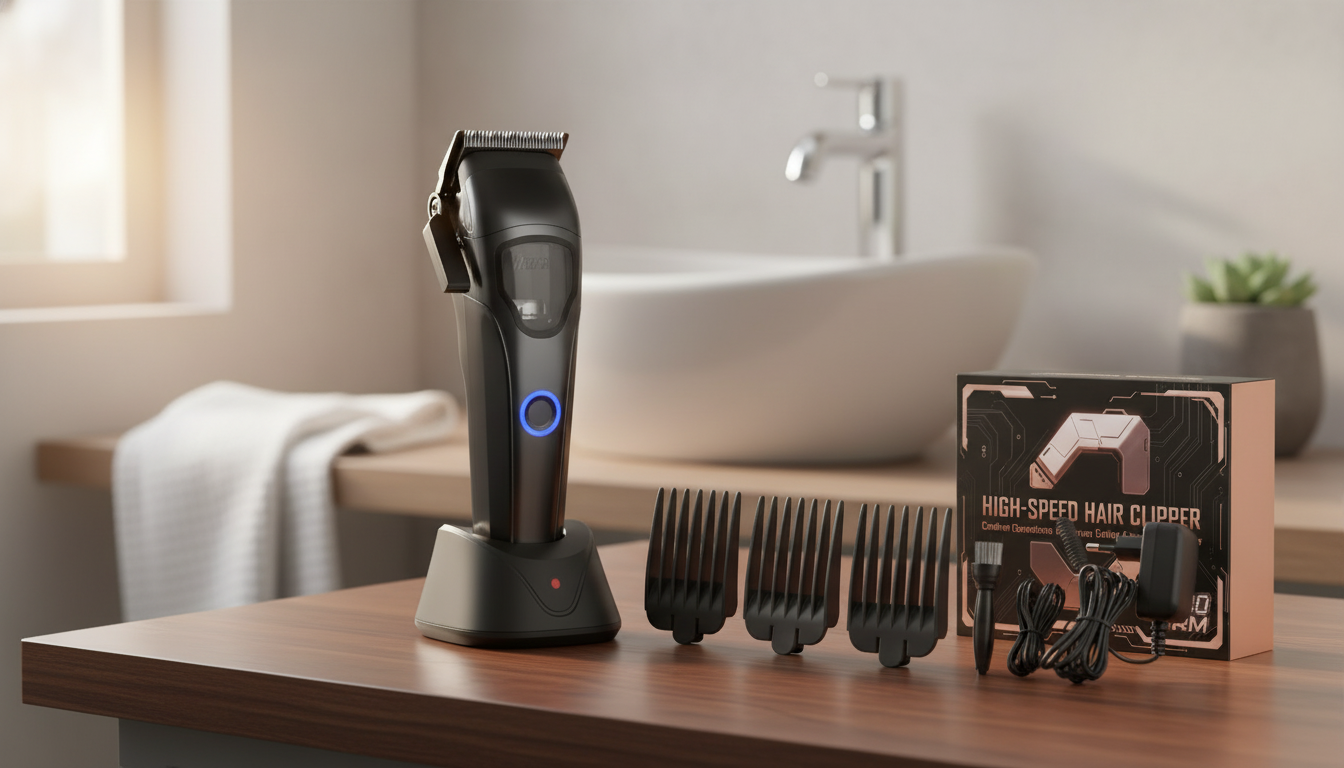
High-Speed Cordless Hair Clipper & T-Blade Trimmer Set for Men: A Practical Setup for Clean Cuts and Sharp Lines
A two-tool setup makes at-home haircuts and detailed edging simpler: a full-size clipper for bulk cutting and fading, plus a T-blade trimmer for crisp lines around the neck, beard, and sideburns. A high-speed cordless set fits naturally into a clean grooming routine because it covers both “remove hair fast” and “finish with precision” without forcing you to compromise on comfort or control. Below is a straightforward guide to what this pairing is best at, which features matter day to day, and how to get consistent results with less irritation. For more guidance, see 4 Best Hair Clippers for Fades: Achieve Precision Every Time.
What a clipper + T-blade set helps you do
A clipper and a T-blade trimmer aren’t duplicates—they’re complementary. The clipper does the heavy lifting, and the trimmer handles the parts where small mistakes show immediately. For further reading, see SUPRENT PRO Professional Hair Clippers for Men – Face Surgery.
- Handle full haircuts with the clipper: removing length quickly, blending, and shaping the overall silhouette.
- Use the T-blade trimmer for precision: sharp outlines, beard detailing, and cleanup around ears and neckline.
- Reduce passes and snagging by pairing speed (for bulk) with a narrow cutting head (for detail work).
- Keep a more consistent look between barber visits: quick touch-ups for sideburns, beard edges, and necklines.
If you’re building a simple home kit, pairing a clipper with a dedicated T-blade often feels more efficient than trying to force one tool to do everything.
Key features that matter in real-world use
Specs can look similar on paper, but day-to-day use comes down to how the tool behaves on thick patches, around the crown, and during detail work near sensitive skin.
- Motor speed and stability: Higher-speed motors can cut dense hair more cleanly, especially through thicker areas without bogging down mid-stroke.
- Cordless power and runtime: Consistent power delivery helps avoid uneven cutting when the battery drops; easy charging matters for weekly maintenance.
- Blade design: The clipper blade should support smooth tapering; the T-blade should be narrow enough for corners and sharp lines.
- Noise and vibration: Lower vibration reduces hand fatigue during fades and longer sessions.
- Ergonomics: Balanced weight and a secure grip improve control around the crown, ears, and neckline.
- Accessories: Guide combs, a cleaning brush, and oil support repeatable lengths and longer blade life.
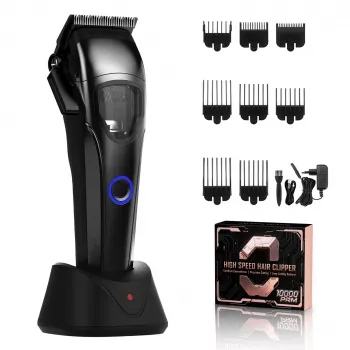
For a ready-to-go pairing, see the High-Speed Cordless Hair Clipper & T-Blade Trimmer Set for Men, which is designed specifically around the “bulk + detail” workflow.
Clipper vs. T-blade trimmer: when to use each tool
The quickest way to a cleaner finish is using the right tool at the right moment, rather than trying to “detail” with a wide clipper head.
- Start with the clipper for bulk removal, then refine with shorter guards for blending and fades.
- Switch to the T-blade for hairline shaping, beard edges, and tight spots where a clipper head feels too wide.
- For sensitive skin, use lighter pressure with the trimmer and rely on multiple gentle passes rather than one hard pass.
- For an even finish, outline only after the main cut is complete—outlines can shift if bulk length changes.
Quick task guide: which tool works best
| Grooming task | Best tool | Tip for cleaner results |
|---|---|---|
| Remove overall length (buzz/short cut) | Clipper | Work against the grain in slow, steady strokes. |
| Fade and blend sides | Clipper | Use guard steps and a flick-out motion to avoid hard lines. |
| Neckline cleanup | T-blade trimmer | Tilt the blade slightly and use short strokes. |
| Beard outline and cheek line | T-blade trimmer | Stretch skin gently for straighter lines. |
| Around ears and tight corners | T-blade trimmer | Use the blade corners lightly; avoid digging in. |
| Final detailing after haircut | T-blade trimmer | Do a dry brush-off first so loose hair doesn’t clog the blade. |
How to get a clean at-home cut (simple workflow)
Consistency comes from repeating the same order of operations each time. This keeps you from overworking one area and helps you spot symmetry issues earlier.
Skin comfort and safety for edging and lining
For more on preventing bumps after hair removal, see guidance from the American Academy of Dermatology Association.
Cleaning, oiling, and keeping blades sharp
For general hygiene and cleaning best practices, the CDC provides clear recommendations that can be applied to grooming tools as well.
Who this set suits best
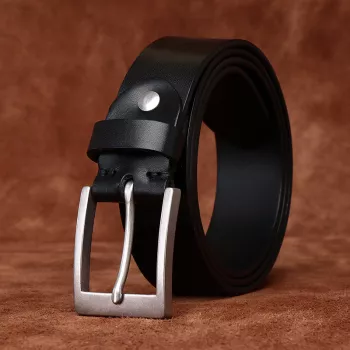
If you’re putting together a polished everyday look beyond grooming, a small upgrade like a classic belt can finish an outfit as cleanly as a sharp neckline. Consider the Men’s Genuine Leather Belt – Classic 1.5 Inch Retro Business & Casual Strap for a simple, versatile staple.
FAQ
Can a T-blade trimmer be used for a full haircut?
It can, but it’s usually slow and less comfortable for bulk removal. A clipper is better for taking down overall length, while the T-blade shines for outlines, tight areas, and final detailing.
How often should clipper and trimmer blades be oiled?
Light oiling after each use (or every few uses for lighter routines) helps reduce heat, drag, and premature dulling. Always brush out hair first and wipe away excess oil so it doesn’t attract debris.
What causes snagging or pulling when trimming?
Snagging is commonly caused by dirty blades, not enough oil, dull or misaligned blades, moving too fast through dense hair, or weak cordless power when the battery is low. Cleaning, oiling, and slowing down on thicker areas usually fixes the problem quickly.













Leave a comment