Beige Tri-Mode 65% Hot-Swap Wireless Mechanical Keyboard
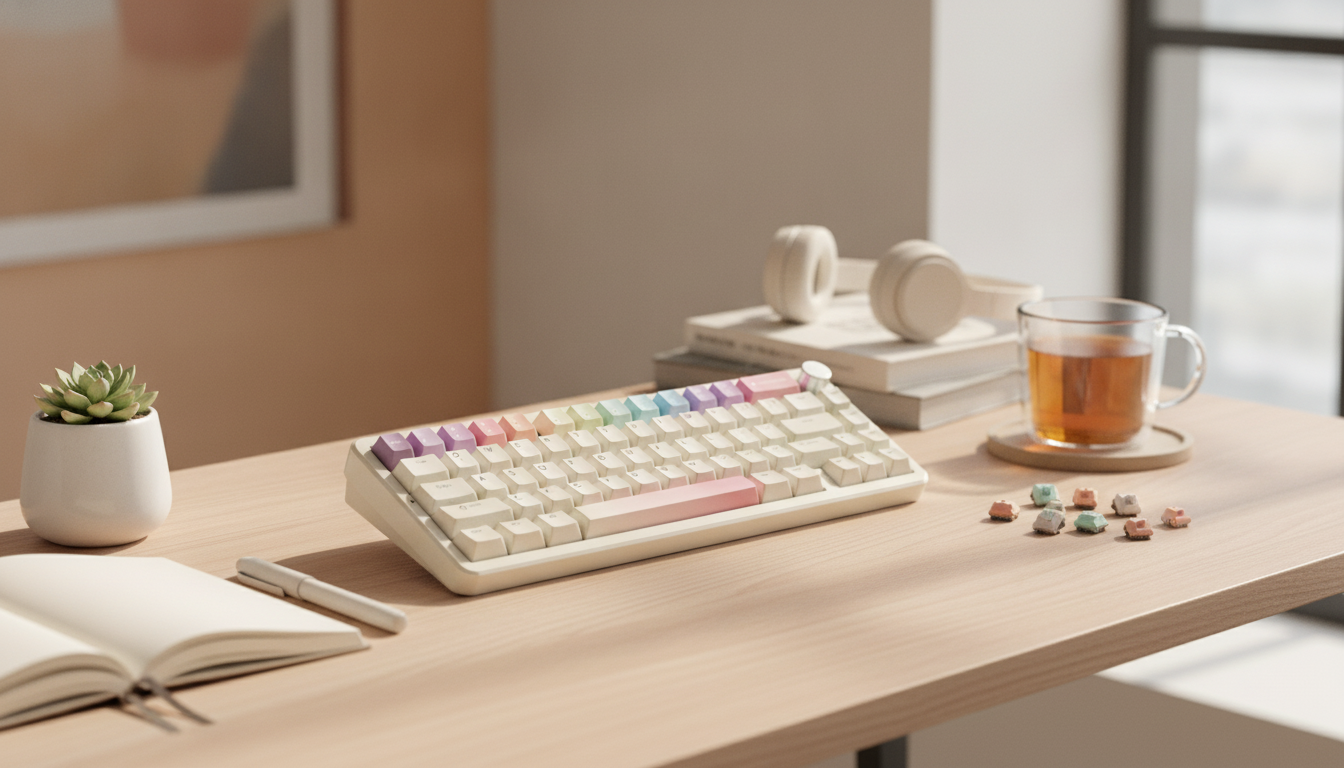
Beige Tri-Mode Wireless Mechanical Keyboard with Hot-Swap Switches and 65% Layout
A compact 65% keyboard can keep the desk clean without giving up everyday navigation keys. This beige mechanical model adds tri-mode connectivity (Bluetooth, 2.4GHz, and wired) plus hot-swappable switch sockets, making it easy to tune the feel and sound over time while staying flexible across devices. The result is a streamlined setup that works just as well for a focused workday as it does for late-night gaming. For more guidance, see [Sponsored] RK-S98 Mechanical Keyboard review – Geekhack.
What Makes This Keyboard Different
Plenty of mechanical keyboards look similar at a glance, but a few practical features separate a “nice” board from one that fits into real routines. For further reading, see ASUS Jelly75 Keyboard (KD201) Review | Page 4 of 4.
- Tri-mode connectivity supports quick switching between devices and use cases: low-latency 2.4GHz for fast response, Bluetooth for portability, and wired for uninterrupted sessions.
- Hot-swappable sockets let you change switches without soldering, so you can adjust typing feel (or replace one bad switch) without servicing the whole keyboard.
- 65% layout keeps arrow keys and a compact navigation cluster while removing the numpad and extra spacing that eats up desk real estate.
- Beige colorway complements warm, minimal, or retro-inspired setups and pairs well with a wide range of keycap styles.
Shop In-Stock Picks
If you’re ready to build out a cohesive setup, these in-stock options can help you get there:
- Beige Wireless Mechanical Keyboard – Tri-Mode, Hot Swappable, 65% Layout
- Vintage Glass Pendant Light with LED Compatibility for Indoor and Outdoor Spaces
Tri-Mode Connectivity Explained (Bluetooth, 2.4GHz, Wired)
Tri-mode is more than a spec-sheet flex—it’s what makes one keyboard work smoothly across a desktop, a laptop, and even a tablet. The key is understanding what each mode does best and setting up a “default” that matches your day-to-day.
Bluetooth
Bluetooth is ideal for travel and flexible workspaces. It’s commonly the easiest way to connect to tablets, phones, and many laptops while keeping cable clutter low. Because Bluetooth behavior can vary by operating system, it’s worth confirming how device switching works (often a function layer shortcut or a dedicated switch) and whether your favorite OS shortcuts are supported. For deeper technical context, the Bluetooth Core Specification outlines the underlying standard.
2.4GHz wireless
For responsive typing and gaming, 2.4GHz wireless is typically the go-to. It uses a USB receiver (dongle) that provides a stable connection with low perceived latency. A simple improvement is placement: keeping the receiver closer to the keyboard reduces interference and dropouts. Also note that some USB 3.0 environments can introduce radio noise; Intel’s paper on USB 3.0 interference with 2.4GHz devices is a useful reference when troubleshooting.
Wired USB
Wired mode is the “always works” option—great for long sessions, shared office desks, and any time you want consistent performance without managing battery life. It’s also commonly required for firmware updates and provides reliable charging, which makes it a smart starting point during initial setup.
Quick Comparison of Connection Modes
| Mode | Best for | Trade-offs |
|---|---|---|
| Bluetooth | Travel, multi-device use, tablets/phones | May have more latency and depends on OS pairing stability |
| 2.4GHz wireless | Low-latency typing and gaming | Requires USB receiver; interference possible if far from receiver |
| Wired | Zero dropouts, charging, updates | Cable management; less portable |
Practical tip: pick one mode as your default (for example, 2.4GHz for your main desktop) and reserve another mode for a second device (Bluetooth for a laptop). This minimizes re-pairing and keeps switching predictable.
Hot-Swappable Switches: How Customization Works
Hot-swap support is one of the most useful quality-of-life features in a mechanical keyboard because it lets you personalize feel and sound without committing to a single switch type forever.
- No soldering required: hot-swap sockets allow switches to be removed and installed with a simple puller.
- Dial in the feel: linear switches are smooth, tactile switches provide a noticeable bump, and clicky switches add a sharper sound and feedback. If you share a room, noise tolerance matters as much as feel.
- Easier maintenance: if one key starts double-typing or becomes inconsistent, you can replace just that switch instead of troubleshooting the whole board.
- Compatibility matters: most boards are designed around MX-style switches, but it’s still important to confirm 3-pin vs. 5-pin support and never force a switch with bent pins. For switch terminology and deeper comparisons, Deskthority’s mechanical keyboard wiki is a solid reference.
Why a 65% Layout Works for Daily Use
A 65% keyboard hits a sweet spot: it saves space like a smaller board, but it keeps the keys people reach for constantly.
Setup Tips for a Smooth First Week
Key Specs to Confirm Before Buying
FAQ
Can the keyboard connect to multiple devices and switch between them?
Yes, tri-mode designs commonly allow Bluetooth pairing with multiple devices, plus a separate 2.4GHz USB receiver connection and a wired USB option. Switching is usually done with a keyboard shortcut (often via a function layer) or a dedicated hardware switch, depending on the model.
Does hot-swappable mean any mechanical switch will fit?
Not always. Most hot-swap boards are built for MX-style switches, but you still need to confirm whether the sockets support 3-pin and/or 5-pin switches. Avoid forcing switches into the socket; straighten any bent pins first to prevent damage.
Is a 65% layout good for work as well as gaming?
For many people, yes—65% keeps arrow keys and a compact navigation area while freeing up mouse space, which is helpful for both productivity and gaming. The main trade-off is the lack of a numpad and that some functions may be accessed through layers or remaps.












Leave a comment