5-Piece Stepping Stones for Kids: Balance Games & Play
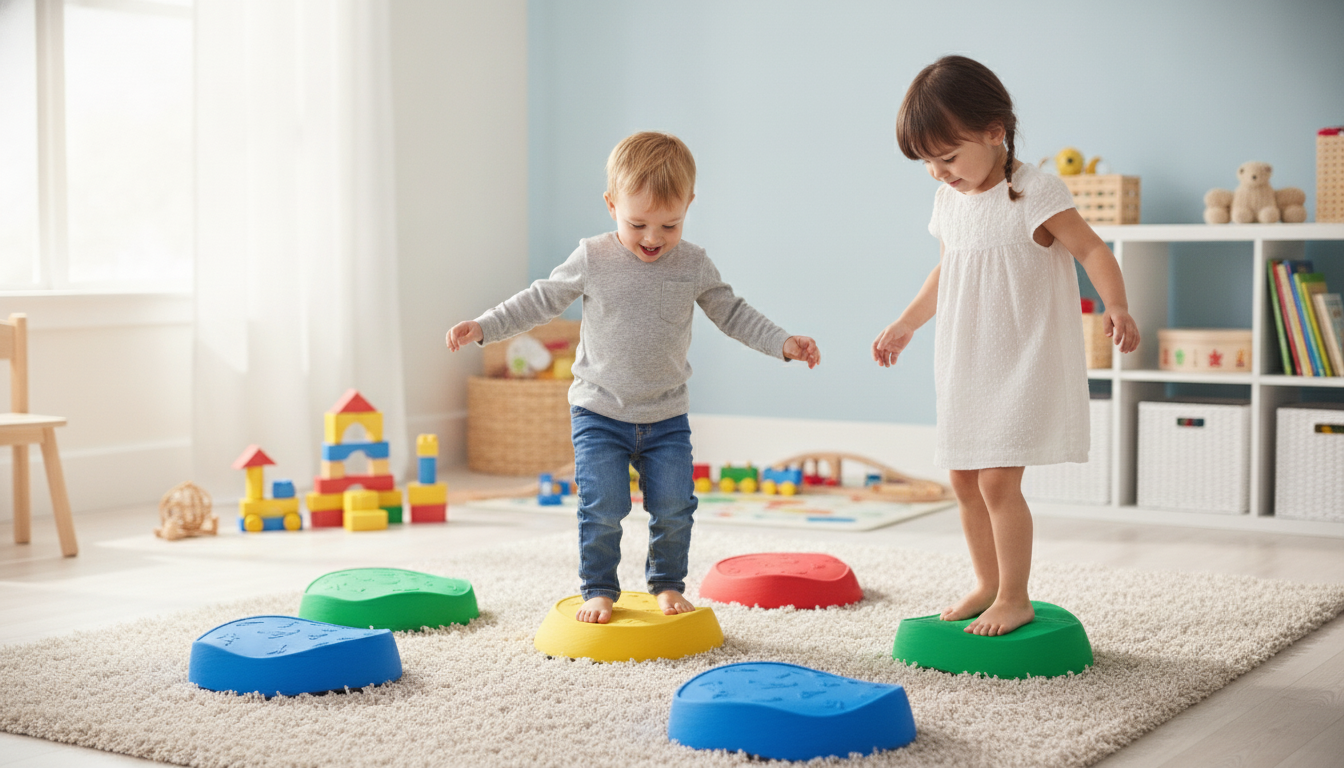
5-Piece Balance Stepping Stones for Kids: Active Play Indoors or Outdoors
Balance stepping stones turn everyday movement into a simple obstacle-course challenge that supports coordination, confidence, and active play. A 5-piece set is an easy starting point for families, classrooms, and therapy-style activities—compact enough for small spaces, yet flexible for endless layouts. With a few minutes of setup, kids can hop, step, pause, and pivot from “island” to “island,” building skills that carry over into playground play, sports, and daily movement routines. For more guidance, see Crossing the Gap: Older Adults Do Not Create Less Challenging ….
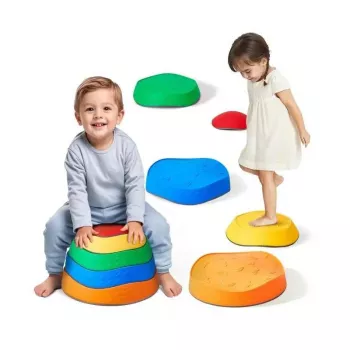
Need a ready-to-go set? Check out the 5-Piece Balance Stepping Stones for Kids for quick indoor or outdoor obstacle-course fun. For further reading, see How Balance Stepping Stones Prepare Your Child for School.
What Balance Stepping Stones Help Kids Practice
- Balance and body control: stepping, pausing, and turning while staying stable on a raised surface.
- Gross motor skills: jumping, landing softly, and controlling momentum between “islands.”
- Spatial awareness: judging distance and planning foot placement before moving.
- Bilateral coordination: alternating feet, crossing midline, and changing directions on cue.
- Confidence through repeatable challenges: kids can start with short gaps and increase difficulty over time.
Movement-rich play supports healthy development and daily activity habits. For broader guidance on kids’ activity needs, see the CDC’s Physical Activity Basics for Children. For why play itself matters for learning and development, the American Academy of Pediatrics discussion on the importance of play is a helpful reference.
Why a 5-Piece Set Works Well at Home and in Classrooms
- Quick to set up: arrange a short path, zig-zag, circle, or mini course in minutes.
- Flexible difficulty: adjust spacing to match age, energy level, or skill.
- Space-friendly: fits in playrooms, living rooms, hallways, and small yards.
- Easy to share: suitable for solo play, sibling games, or small-group rotations.
- Pairs well with other movement tools: cones, painter’s tape lines, bean bags, or a jump rope for added tasks.
In multi-use spaces (like a playroom corner that doubles as a reading nook), good lighting can also make active zones feel safer and more inviting. For covered patios, breezeways, or indoor/outdoor rooms, a fixture like the Vintage Glass Pendant Light with LED Compatibility for Indoor and Outdoor Spaces can help brighten the area where kids move and land.
Safe Setup: Surfaces, Spacing, and Supervision
- Choose a stable surface: use on flat flooring or level outdoor ground; avoid steep slopes or uneven gravel.
- Create a clear zone: remove toys, cords, and low furniture edges from the immediate landing area.
- Start close, then expand: begin with small gaps so kids can step without leaping; increase spacing gradually.
- Teach “soft landings”: knees slightly bent, eyes forward, and controlled steps instead of running jumps.
- Supervise early use: especially for younger children, new users, or multi-kid play to prevent crowding.
One simple rule that helps in shared spaces: “One mover at a time.” Even when kids are taking turns quickly, that small pause reduces collisions and keeps focus on balance instead of speed.
Games and Challenges That Keep It Fresh
- Color or number calls: assign each stone a color/number and call out the next target.
- Freeze balance: pause for 3–10 seconds on each stone before moving on.
- Carry-and-balance: transport a light item (bean bag, small ball) without dropping it.
- Opposite-foot rule: only step with the left foot on odd stones, right foot on even stones.
- Memory path: set a pattern (1-3-5-2-4) and repeat it faster each round.
- Story adventure: pretend stones are “lava safe zones,” “river rocks,” or “planet landings.”
To keep kids engaged without turning it into “win/lose,” use personal bests: smoother landings, quieter steps, longer freeze holds, or completing the pattern with fewer wobbles.
Age-Based Ideas and Difficulty Progression
- Toddlers: focus on stepping and stopping; keep stones close together and encourage hand-free balance.
- Preschoolers: add simple rules (freeze, clap, turn) and introduce gentle jumping when ready.
- Early elementary: increase gaps, add turns, and combine with counting, spelling, or category naming.
- Mixed ages: set two routes—an easier inner loop and a harder outer loop—so everyone can play together.
Progression Guide for Balance-Stepping Play
| Skill level | Stone spacing | Suggested challenge | Goal |
|---|---|---|---|
| Beginner | Very close (small steps) | Step-stop-step; pause 3 seconds each stone | Stable footing and confidence |
| Developing | Moderate (comfortable stride) | Zig-zag route; add a turn on the middle stone | Control while changing direction |
| Confident | Wider (requires a hop) | Two-foot jumps; freeze balance 5–10 seconds | Safe landing mechanics |
| Advanced | Mixed spacing (some near, some far) | Carry an object; follow a called-out sequence | Planning and coordination under rules |
Cleaning, Storage, and Long-Term Use
When This Type of Play Set Makes a Great Gift
For a practical, space-friendly option that still feels like a “big” play upgrade, the 5-Piece Balance Stepping Stones for Kids is a simple way to add active fun to everyday routines.
FAQ
Are balance stepping stones safe for indoor floors?
They can be safe on flat, stable indoor surfaces when the area is clear and the stones are clean and dry underneath. Start with close spacing so kids can step (not leap), and supervise early sessions to reduce rushing and crowding.
What age is appropriate for balance stepping stones?
Many children can start as toddlers with supervised stepping and short gaps, then progress to hopping, jumping, and rule-based games during preschool and early elementary years. Adjust the spacing and challenges to match the child’s balance and comfort level.
How far apart should the stones be placed?
Begin with small step distances, then move to a comfortable stride, and later to short hops as landing control improves. A good guide is choosing spacing that allows stable, quiet landings rather than stretched reaches or running jumps.












Leave a comment