36-Inch Dual-Purpose Lake Rake for Shoreline Cleanup
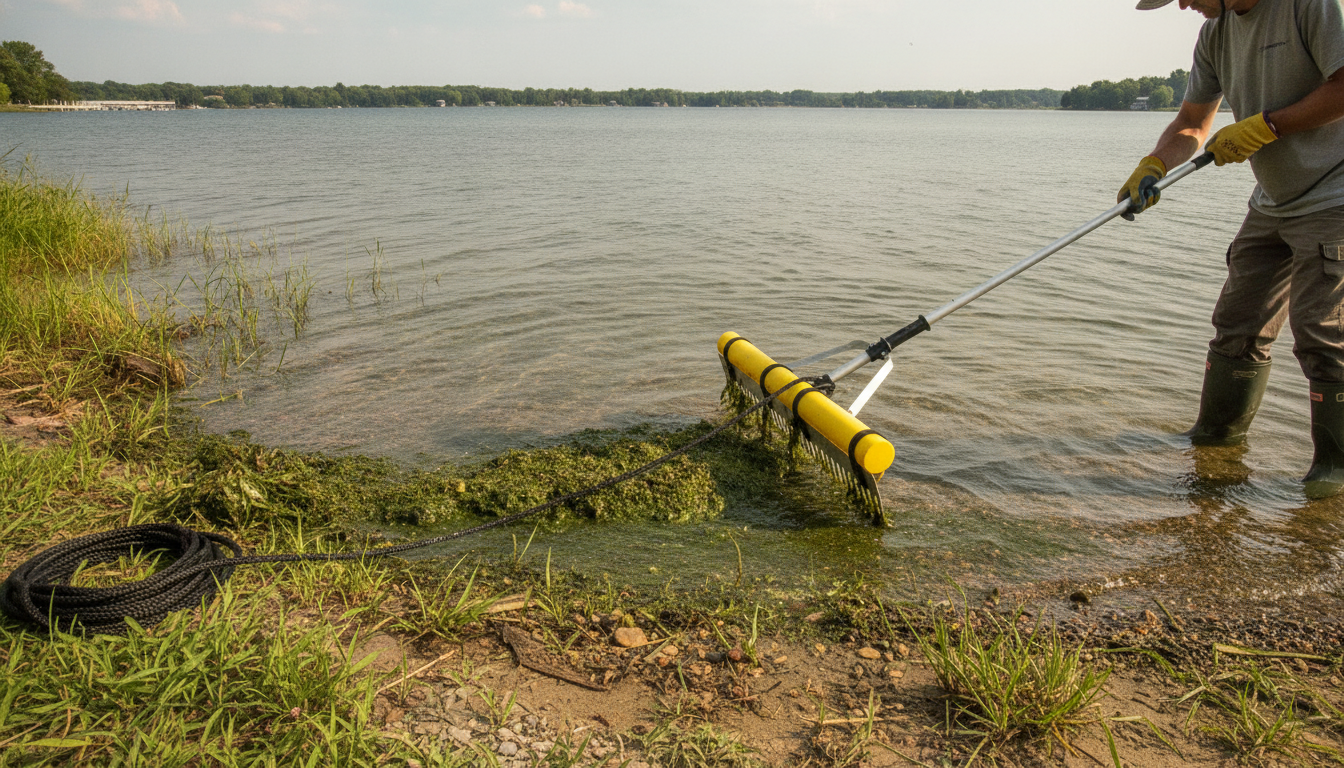
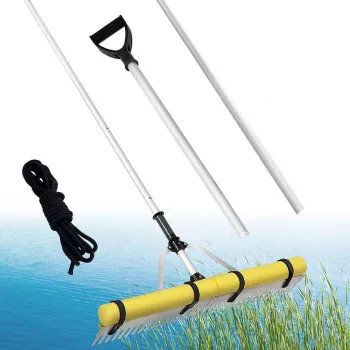
36″ Dual-Purpose Landscape & Lake Rake for Shorelines, Lawns, and Gravel Beds
A dual-purpose landscape and lake rake is built for the reality of shoreline properties: the “mess” doesn’t stay on land or in water. One day it’s windblown leaves and twigs along the swim edge; the next it’s washed-in algae mats, scattered gravel, or uneven sand near the dock. A 36-inch head gives you wide coverage for grooming and cleanup, helping you pull debris in for pickup and smooth the surface behind you without constantly switching tools.
What a Dual-Purpose Landscape & Lake Rake Does
This style of rake is meant to cover two common zones with one tool: yard surfaces and shallow water edges. On land, it can level and tidy soil, gravel, sand, or mulch. In shallow water, it’s useful for pulling in weeds, leaves, sticks, and floating algae mats that collect near shorelines and docks.
The working motion is simple but effective: pull material toward you to create manageable windrows or piles, then make another pass to redistribute and level what’s left. That two-step workflow can reduce the need for repetitive hand-scooping—especially when you’re dealing with light-to-moderate debris spread across a wide area.
It’s a practical tool after storms, during seasonal beach and dock opening/closing, and for routine maintenance when you want a clean shoreline edge without turning the job into an all-day project.
Best Use Cases Around a Shoreline Property
Beach and swim area touch-ups
Use a wide rake to comb sand and pull out leaves, twigs, and light weed growth near the edge. A consistent grooming pattern also helps the area look “finished” after heavy foot traffic or a windy day.
Dock and boat launch edges
At the perimeter of a dock or launch, floating debris can become a tangle hazard. Raking it toward shore early—before it sinks—keeps the area clearer for entry, exits, and prop protection.
Gravel driveways and paths
A 36-inch head can help level high spots, pull loose stone back into ruts, and maintain a smoother walking/driving surface. Overlapping passes make the finish more uniform.
Garden beds and landscape prep
Spread topsoil or compost, smooth surfaces before seeding, and remove small surface debris. The wide head is especially handy for final grading where you want fewer visible ridges.
Post-maintenance cleanup (where permitted)
After trimming shoreline vegetation, raking helps gather cut plant matter quickly so it doesn’t drift back into the water. Always follow local rules for shoreline work and disposal.
Handling and Technique Tips (Water + Land)
Shallow-water raking
Work in short pulls with the rake head low and flat. If water clarity matters, avoid aggressive digging that stirs up sediment and creates turbidity—especially in soft bottoms.
Weed removal approach
Land leveling
Reduce strain
Collection workflow
36″ Dual-Purpose Landscape & Lake Rake: At-a-Glance
| Feature | What it helps with | Practical note |
|---|---|---|
| 36-inch head width | Faster coverage on beaches, gravel, and shallow edges | Use shorter pulls in heavy weeds to avoid overload |
| Dual-zone use (land + water) | One tool for shoreline grooming and yard smoothing | Rinse after water use to keep fasteners and surfaces clean |
| Raking/pulling action | Windrowing debris into piles for pickup | Stage a tarp or bin to keep debris from returning to the water |
| Wide leveling capability | Smoother finish on sand and gravel | Overlap passes for a more uniform surface |
Recommended Tools In Stock
If you want one tool that can move seamlessly between shoreline edges and yard surfaces, the 36″ Dual-Purpose Landscape & Lake Rake is a straightforward choice for routine grooming, debris pulling, and surface smoothing.
For shoreline patios, covered porches, or dock-adjacent seating areas, lighting can make evening cleanup and storage safer and easier. Consider the Vintage Glass Pendant Light with LED Compatibility for Indoor and Outdoor Spaces for functional illumination where you sort debris, hang tools, or stage bins.
Care, Storage, and Safety
Pay attention to what comes up. Sharp sticks, hooks, broken glass, and fishing line can snag unexpectedly; gloves and careful disposal go a long way toward preventing injuries. To help prevent spreading invasive species, remove visible plant fragments and mud, rinse, drain, and dry thoroughly before moving the rake to a different water body. The USFWS Clean, Drain, Dry guidance is a helpful baseline: Stop Aquatic Hitchhikers (Clean, Drain, Dry).
For storage, keep the head off the ground to protect the working edge and maintain consistent performance. If you’re managing algae or nutrient-driven plant growth, background information from the EPA can help frame what you’re seeing season to season: US EPA — Aquatic Weeds and Algae.
When a Wide Lake Rake Is the Right Tool (and When It Isn’t)
If vegetation returns quickly, raking still helps keep nearshore areas usable, but results improve when you pair maintenance with local best practices for mechanical removal and disposal. For additional guidance, see University of Minnesota Extension materials on aquatic plant management: Aquatic plant management (mechanical removal guidance).
FAQ
How deep can a lake rake be used effectively?
It’s most effective in shallow water near the shoreline, where you can keep the head low and maintain control during the pull. Practical depth depends on your handle length, shoreline slope, and how dense the vegetation and debris are.
Will raking remove weeds permanently?
Raking removes existing growth and loose debris, but many aquatic plants regrow from roots, rhizomes, or remaining fragments. Consistent maintenance and following local guidelines can help keep regrowth manageable.
How should a lake rake be cleaned to avoid spreading invasive species?
Remove all visible plants and mud, rinse thoroughly, drain any trapped water, and let the tool dry completely before using it elsewhere. Follow local decontamination guidance when moving between different lakes or waterways.














Leave a comment