Small-Space Layouts: Multi-Use Rooms, Less Clutter
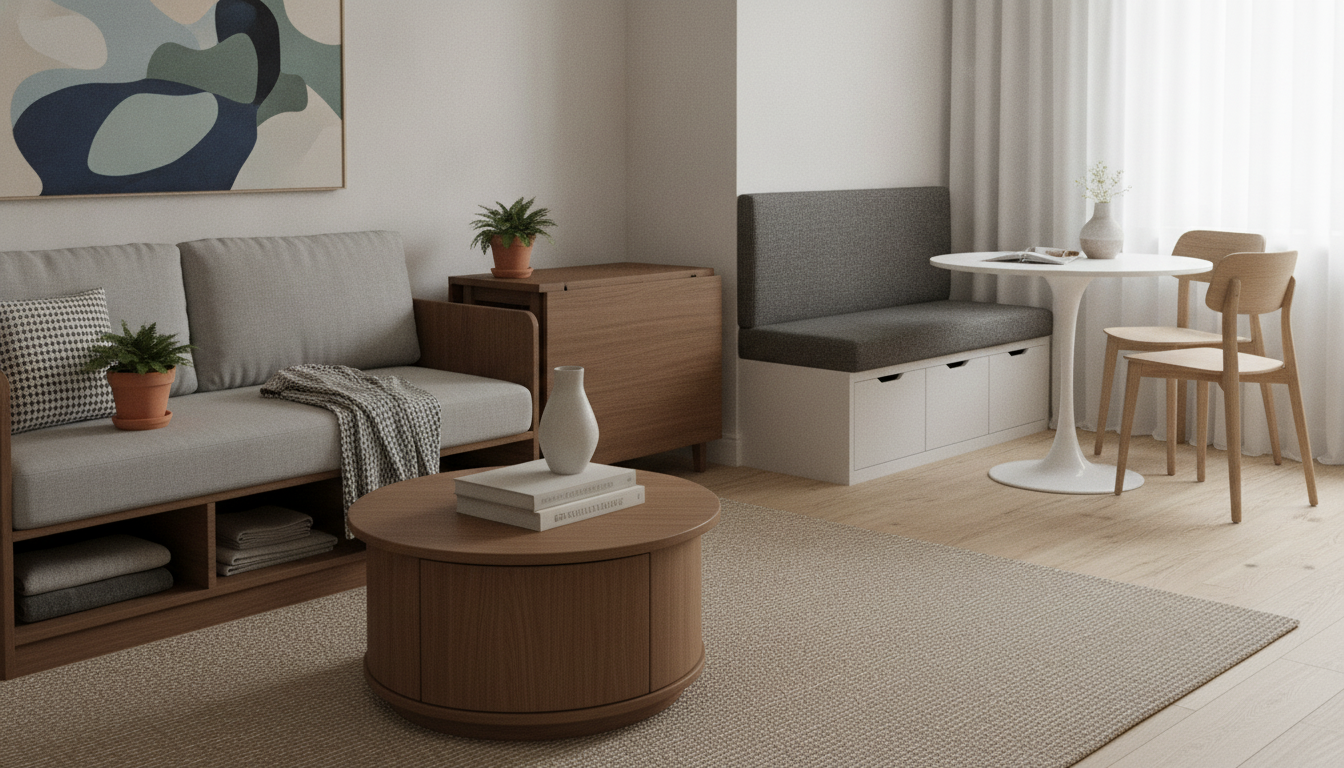
Maximize Function, Minimize Clutter: Multifunctional Room Layouts for Small Spaces
Small rooms feel bigger when every zone has a purpose, pathways stay clear, and storage is built into the layout instead of added as an afterthought. The goal isn’t to “fit more stuff”—it’s to support real daily routines (sleeping, working, hosting, and relaxing) with fewer visual interruptions and less friction.
Start With a Simple Space Plan
Before shopping or rearranging, take 20 minutes to plan the room like a mini floor plan.
- Measure the room and note fixed elements: doors, windows, radiators, outlets, and HVAC vents.
- Mark “no-block” areas: door swings, drawer clearance, and at least one clear walkway (generally 30–36 inches where possible).
- List top activities (sleep, work, dining, workouts, hobbies) and rank them by frequency to decide what deserves permanent space.
- Create a “landing zone” near the entry: hooks, a tray, and a small bin to prevent clutter migration.
A quick win: if you can walk from the entry to the main zone (bed/sofa/desk) without turning sideways, the layout is already doing half the decluttering for you.
Zone the Room Without Building Walls
Zoning makes a small space feel intentional—even when it has to do double or triple duty.
- Use rugs, lighting, and furniture orientation to define zones (e.g., sofa facing inward to create a living zone; desk turned perpendicular to a wall to signal a work zone).
- Keep sightlines open: choose low-profile pieces or open shelving where a tall unit would make the room feel tight.
- Make one “quiet wall” with minimal décor to reduce visual noise and give the eye a place to rest.
- Use curtains, folding screens, or bookcases as soft dividers only when privacy is truly needed.
Zone-by-zone layout decisions (quick reference)
| Zone | Best anchor piece | What to avoid | Small-space upgrade |
|---|---|---|---|
| Living | Compact sofa or loveseat | Oversized sectional blocking walkways | Nesting tables or ottoman with hidden storage |
| Work | Slim desk or wall-mounted surface | Deep desk that steals circulation space | Monitor arm + cable tray to clear the surface |
| Sleep | Bed with drawers or lift-up storage | Nightstands wider than needed | Wall sconces to replace table lamps |
| Dining | Drop-leaf or extendable table | Permanent 4–6 seat table in a studio | Stackable chairs or a bench that tucks in |
| Entry | Hooks + narrow console/shoe cabinet | Piles of shoes/bags on the floor | Mirror to reflect light and enlarge the feel |
Choose Space-Saving Furniture That Works Harder
Multifunctional pieces don’t just save space—they reduce the number of objects competing for attention.
- Prioritize dual-purpose pieces: storage ottomans, lift-top coffee tables, sleeper sofas, and daybeds with drawers.
- Look for “thin but strong”: narrow consoles, wall-mounted shelves, and slim cabinets that keep floors clear.
- Use vertical storage intentionally: one tall closed cabinet can replace several small open shelves that look cluttered.
- Avoid “almost useful” pieces: furniture that doesn’t fit standard bins, can’t hide cables, or has awkward dead space.
If you want a structured set of layouts and furniture checklists, the Multifunctional Room Layouts eBook is designed to help map zones, select anchor pieces, and keep clutter from returning once the room looks great.
Reduce Visual Clutter With Built-In Habits
Even the best layout fails if everyday items never get a “parking spot.” Build tiny habits into the room design so tidiness becomes the default.
- Adopt a one-touch rule for daily items: each category gets one home (keys, mail, chargers, cleaning supplies).
- Limit countertop and tabletop storage; place storage inside closed furniture to reduce visual busy-ness.
- Use matching bins and labels inside cabinets so storage stays stable over time.
- Create a weekly 10-minute reset checklist: clear surfaces, return items, empty trash, and swap laundry/linens.
For wardrobes in small bedrooms, fewer “maybe” pieces also means fewer piles. Keeping a streamlined closet makes it easier to maintain your entry landing zone and laundry rhythm—especially with simple staples like Liu Jo Women’s Blue Plain Jeans or an easy warm-weather option like the Only Women’s Blue Organic Cotton Skirt.
Smart Home Ideas That Save Space (Not Just Energy)
In small rooms, “smart” matters most when it reduces device bulk, cord sprawl, and surface clutter.
For lighting guidance and efficient options, reputable references include ENERGY STAR’s smart home and energy-saving products and the U.S. Department of Energy lighting overview.
If your room needs a single statement fixture instead of multiple small lamps, a ceiling-hung option can keep tabletops clearer—consider the Vintage Glass Pendant Light with LED Compatibility for a streamlined lighting footprint.
Room Layout Templates That Adapt
Common Layout Mistakes That Create Clutter
A Guided Layout Plan for Multifunctional Rooms
- Use a repeatable process: measure, map fixed elements, define zones, select anchor pieces, then add storage and lighting.
- Plan one flexible zone (folding desk, nesting tables, or movable cart) to handle occasional needs without permanent clutter.
- Keep a “one in, one out” rule for decorative objects in small rooms to maintain the clean baseline.
- For a step-by-step guide with layouts and space-saving ideas, see the “Maximize Function, Minimize Clutter | Multifunctional Room Layouts” eBook.
FAQ
What’s the easiest way to make a small room feel less cluttered fast?
Clear and protect one main surface (coffee table or desk), create a landing zone by the entry, and move the rest into closed storage so the room has visible breathing space.
How much walking space should be left around furniture?
Aim for a clear primary path; where possible keep roughly 30–36 inches for comfortable circulation, and don’t block door swings or drawers.
Which furniture upgrades give the biggest space savings?
Storage beds, nesting tables, wall-mounted lighting, and extendable/drop-leaf dining tables typically free the most floor and surface area without sacrificing function.









Leave a comment