House-Frame Twin Bunk Bed with Slide: Setup & Safety
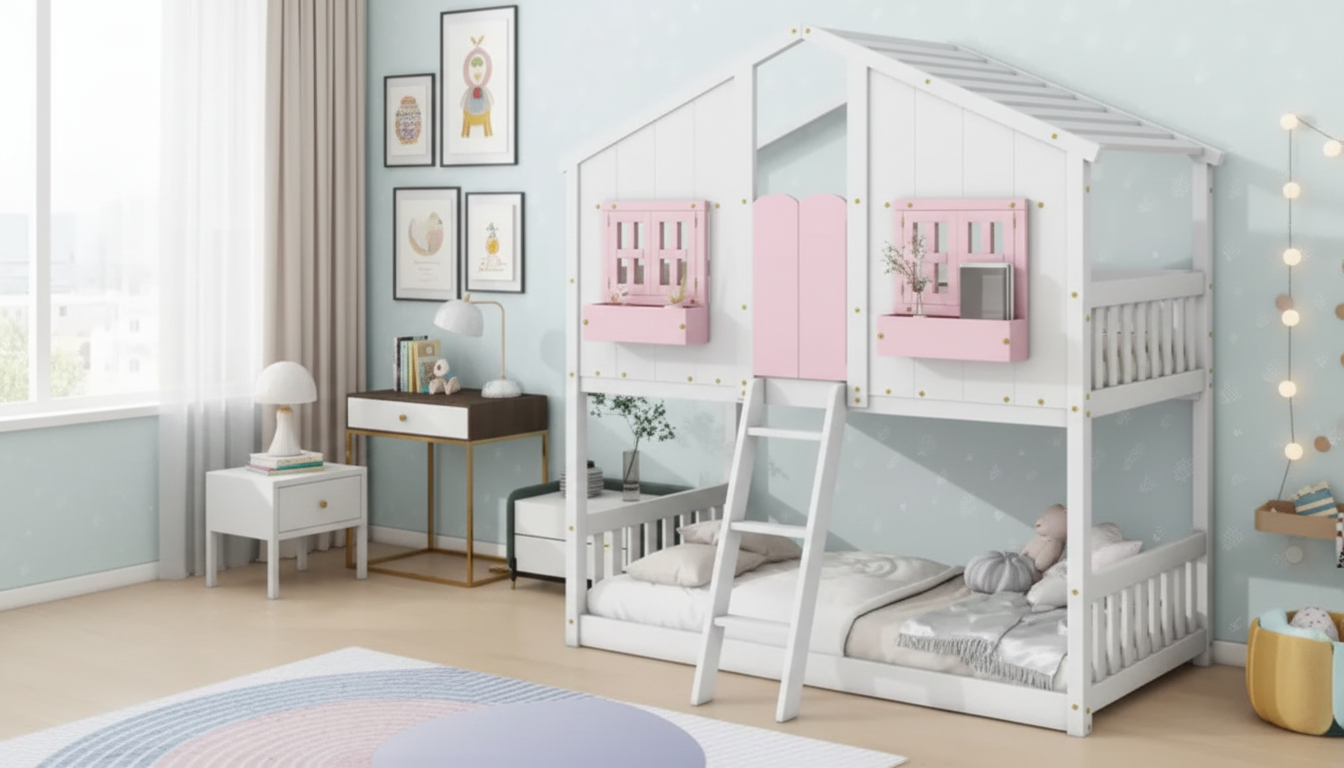
Twin Over Twin House Bunk Bed with Roof, Windows, Slide, and Safety Guardrails
A playful house-frame bunk bed can turn a shared room into a space for sleep, reading, and pretend play—without sacrificing practical safety features. This twin over twin design pairs a roof-and-window silhouette with a built-in slide and full-length guardrails, offering a compact footprint that still feels like a mini clubhouse.
What makes this house-style bunk bed different
House-inspired bunk beds stand out because they blend a sleep setup with a room-defining focal point. Instead of looking like “just furniture,” the roofline and window cutouts create a cozy nook effect—especially when paired with warm lighting and simple bedding.
- House-frame top profile with roof and window cutouts to create a cozy, themed look.
- Twin-over-twin layout to fit two standard twin mattresses while saving floor space compared to two separate beds.
- Integrated slide for an easy, fun exit from the top bunk (and an alternative to climbing down first thing in the morning).
- Safety guardrails designed to reduce rolling risk on the upper bunk during sleep.
- Works well for sibling rooms, sleepovers, and small bedrooms where play space still matters.
To keep the look charming (not chaotic), consider a simple color palette for bedding, then let the house shape and slide be the “fun” element that doesn’t need extra clutter to feel special.
Room fit and layout planning
A bunk bed with a slide asks a little more from the room than a standard stacked frame. A few measurements and layout decisions upfront can prevent daily annoyances—like a slide that exits into a toy bin or an entry side that’s squeezed too close to a wall.
- Measure ceiling height to ensure comfortable headroom above the top bunk and clearance for sitting up.
- Plan the slide landing zone: keep a clear path and avoid placing dressers, toy bins, or nightstands in the slide’s runout area.
- Leave enough walking space around the ladder/entry side to avoid bumps during nighttime use.
- Consider wall placement: positioning the bed along a longer wall can help keep the slide and entry more open.
- Use a rug with grip under the slide exit area to help reduce slipping (avoid thick pile that could bunch up).
Quick planning checklist
| What to check | Why it matters | Practical tip |
|---|---|---|
| Ceiling height | Comfort and safety on the top bunk | Aim for enough clearance to sit up comfortably; confirm before assembly |
| Slide clearance | Prevents collisions and trip hazards | Keep a clear landing zone and a straight exit path |
| Traffic flow | Reduces nighttime bumps | Leave a walkway to the bathroom/door without cutting across the slide area |
| Lighting | Safer climbing and calmer bedtime | Add a soft wall sconce or pendant light away from the slide path |
| Floor protection | Reduces noise and protects surfaces | Use felt pads on legs and a non-slip rug near the slide exit |
Safety features to look for during setup
Even a sturdy bunk bed can feel “off” if it’s assembled with hardware out of order or if parts aren’t seated tightly. Plan to do a final safety pass after assembly, then another after a week of real-life use.
- Guardrails: confirm full-length coverage on the open side(s) of the top bunk and verify secure fastening after tightening hardware.
- Ladder/entry stability: ensure the entry point feels rigid with no wobble; re-check all bolts after the first week of use.
- Mattress fit: use the recommended mattress thickness so the top of the mattress remains below the guardrail height.
- Slide attachment: confirm the slide is anchored according to the instructions and does not flex excessively at the top connection point.
- Age guidance: upper bunks are generally intended for older children; follow product labeling and household readiness.
For additional bunk bed safety guidance and standards context, review the U.S. Consumer Product Safety Commission (CPSC) bunk bed guidance and the ASTM F1427 bunk bed safety specification.
Comfort and sleep setup
Comfort matters more in bunk beds because kids tend to shift positions near rails and corners. Keeping the sleep surface breathable and uncluttered can also make nighttime feel calmer—especially in rooms that do double duty as play spaces.
If you want a warm, room-defining glow that doesn’t compete with the bed’s playful silhouette, consider a ceiling fixture like the Vintage Glass Pendant Light with LED Compatibility for Indoor and Outdoor Spaces, placed safely away from the slide path and high-traffic climb zones.
Assembly and care over time
Everyday use tips for shared rooms
For families who like a consistent wind-down rhythm, a short printable routine can help make bedtime cues predictable—consider Simple Daily Rituals to Soothe Your Mind – Digital Guide for Simple Rituals to Calm My Mind Daily, Stress Relief, Mindfulness Routine & Mental Clarity as a gentle structure for quieter evenings.
FAQ
What age is appropriate for the top bunk?
Upper bunks are commonly recommended for children ages 6 and up. Follow the product’s specific labeling and consider your child’s sleep habits, comfort with climbing, and ability to follow safety rules.
How do guardrails and mattress thickness work together for safety?
If a mattress is too thick, it reduces the effective height of the guardrail above the sleep surface. Use the specified mattress thickness so the guardrail remains meaningfully above the mattress and helps reduce rolling risk.
How much clear space should be kept at the end of the slide?
Keep a clear landing zone with no furniture, hard edges, or toy bins in the runout area. A non-slip rug and a straight exit path help make daily sliding safer and more predictable.












Leave a comment