AI Reframing: Rewrite Unhelpful Thoughts in 6 Steps
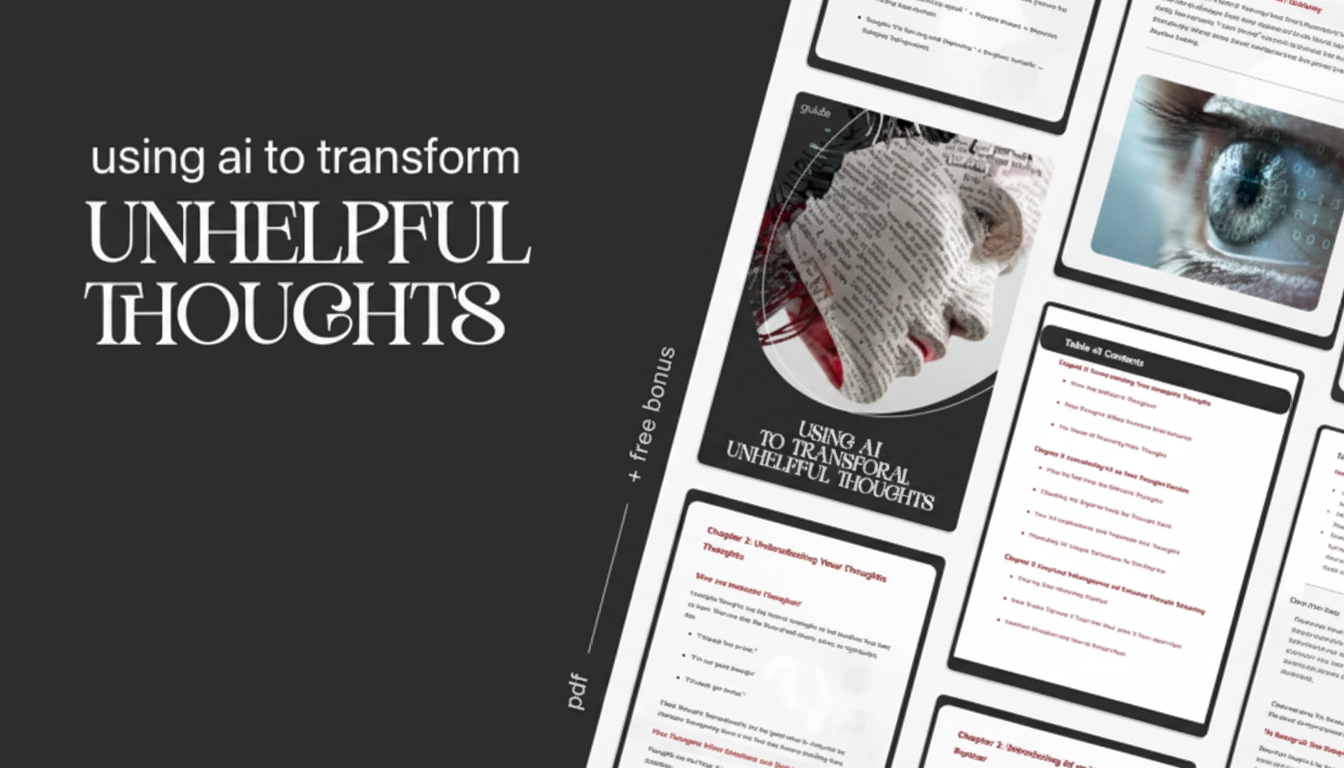
Using AI to Transform Unhelpful Thoughts: A Practical Digital Guide to Mindset Reframing
Unhelpful thoughts can feel automatic, convincing, and hard to interrupt—especially under stress. A quick spike of emotion can make a story in your head feel like a fact: “I’m failing,” “They’re mad,” “This will never work.” This digital-first approach treats AI as structured support for cognitive reframing: spotting thinking traps, generating more balanced alternatives, and turning new perspectives into repeatable habits. The goal isn’t forced positivity. It’s accuracy, self-compassion, and a next step you can actually do.
What “Unhelpful Thoughts” Look Like in Daily Life
Most unhelpful thoughts follow familiar patterns. You might catastrophize (“This will ruin everything”), mind read (“They think I’m incompetent”), or fall into all-or-nothing thinking (“If it’s not perfect, it’s pointless”). Other common traps include overgeneralizing (“This always happens”), labeling (“I’m a mess”), and discounting the positive (“That doesn’t count”).
These thoughts don’t just live in your head—they shape behavior. People often respond with avoidance, procrastination, irritability, reassurance seeking, or rumination that loops without resolution. They also feel true for understandable reasons: emotional reasoning (“I feel anxious, so danger must be real”), attentional bias (your brain scanning for threat), stress physiology (fight-or-flight narrowing perspective), and past learning that trained you to expect certain outcomes.
A helpful baseline: thoughts are not facts. They’re hypotheses. And like any hypothesis, they can be tested, adjusted, and rewritten in language that’s more complete and more usable.
How AI Helps With Reframing (And Where It Doesn’t)
Where AI can help
AI works best as a nonjudgmental mirror. It can reflect your phrasing back to you and highlight patterns you might miss—especially when you’re activated or tired. It also acts as a fast brainstorming partner, offering alternative interpretations and coping statements in seconds. Finally, it’s good at adding structure: turning a vague worry into a clearer problem statement, constraints, and a few doable next steps.
Where AI shouldn’t replace humans
AI can’t diagnose, replace therapy, or fully understand your personal history and context. It may miss nuance, overconfidently guess, or accidentally reinforce reassurance-seeking if you keep querying it to feel certain. Critical thinking, consent, and emotional boundaries stay essential. The best use case is short, frequent reframing sessions that build your skill over time—like mental reps.
For clinical background on cognitive approaches, the American Psychological Association’s overview of CBT is a useful reference point. For anxiety education and when to get support, see NIMH’s Anxiety Disorders resource.
A Simple 6-Step Reframing Flow Using AI
This flow is designed to be quick enough to use in real life—before a meeting, after a tense text, or during a stress spiral.
Reframing examples you can adapt
| Unhelpful thought | Likely distortion | Balanced reframe | Small next step |
|---|---|---|---|
| “If I make one mistake, everything will fall apart.” | Catastrophizing / all-or-nothing | “Mistakes are data. One error is unlikely to undo everything, and I can correct course.” | List the top 2 risks and one mitigation for each. |
| “They didn’t reply— they must be upset with me.” | Mind reading | “There are many reasons for silence. I can check facts before assuming.” | Send one clear follow-up or wait a set time before re-checking. |
| “I’m behind; I’ll never catch up.” | Overgeneralizing / fortune telling | “I’m behind right now, and progress is still possible with prioritization.” | Choose the single highest-impact task and do 10 minutes. |
| “I can’t handle this.” | Emotional reasoning / labeling | “This is hard, but I’ve handled hard things before. I can take the next step.” | Name the next step out loud; remove one obstacle (close tabs, set timer). |
AI Reframe Requests That Produce Better Results
Safety, Privacy, and Emotional Boundaries
A practical boundary is containment: set a timer, complete one reframe cycle, then take one real-world action (send the email draft, drink water, walk outside, do 10 minutes of the task). If depression or anxiety persists, trauma triggers appear, or daily functioning is significantly affected, consider professional support. For a classic skills-based approach to mood and thought tracking, resources related to Mind Over Mood can complement structured practice.
Making Reframing Stick: A 7-Day Micro-Practice
Digital Tools and Guides That Pair Well With Reframing
- Simple Daily Rituals to Soothe Your Mind – Digital Guide for Simple Rituals to Calm My Mind Daily, Stress Relief, Mindfulness Routine & Mental Clarity (great for pairing a reframe with a calming routine you’ll repeat)
- Solo Traveler’s Guide to Staying Safe | Guide | Digital Download PDF eBook | Solo Travel Safety Tips & Checklist | Travel Security Planning (useful when worry spikes around uncertainty and planning)
- Vintage Glass Pendant Light with LED Compatibility for Indoor and Outdoor Spaces (a calmer environment can make it easier to pause, reflect, and follow through on micro-actions)
Digital Guide Download: What’s Inside and Who It’s For
FAQ
Is using AI for reframing the same as therapy?
No. AI can support reflection and skills practice, but it isn’t a licensed clinician and can’t diagnose or provide crisis care. If symptoms are persistent, severe, or feel unsafe, professional help is the right next step.
What if the reframe feels fake or overly positive?
Use a neutral, evidence-based reframe that feels “true enough,” even if it’s not inspiring. Include uncertainty (“It’s possible…”) and pair it with a small action so the new thought is reinforced by real experience.
Can I use this method for anxiety, work stress, and relationship worries?
Yes—cognitive distortions show up across situations, so the method applies broadly. Use extra caution with trauma-related content, protect privacy, and seek human support when the topic feels overwhelming or destabilizing.














Leave a comment