AI Anxiety Tracker Routine: Spot Triggers, Build Coping Skills
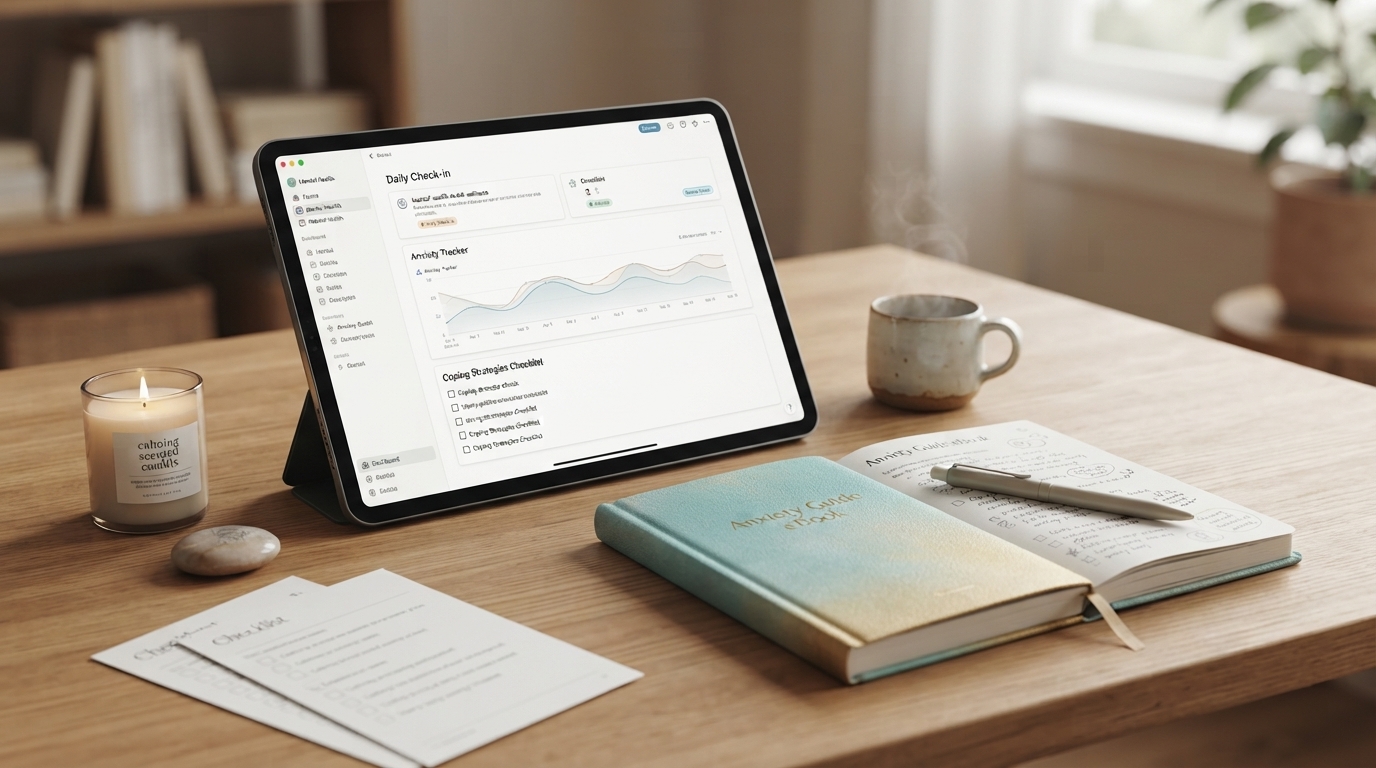
A Calmer Routine: Using an AI-Powered Anxiety Tracker to Spot Triggers and Build Coping Skills
Anxiety often feels unpredictable, but patterns usually exist—sleep changes, specific situations, certain thoughts, or even how the body feels before a spike. A digital anxiety guide that combines tracking, reflection prompts, and structured checklists can turn vague worry into clear signals. This guide lays out a practical way to use an AI-powered anxiety tracker to identify triggers, understand early warning signs, and create coping strategies that are realistic for busy days.
What an AI-powered anxiety tracker helps with (and what it doesn’t)
A well-designed tracker creates a gentle routine: you capture the same few data points each day, and the tool helps you notice what tends to come first—sleep dips, caffeine, certain meetings, scrolling the news, or specific “what if” thoughts. Over time, that consistency can make anxiety feel less random.
- Turns scattered notes into consistent data: mood, body sensations, situations, thoughts, and habits
- Helps recognize patterns across time (day of week, sleep quality, social settings, caffeine, workload)
- Supports skill-building with prompts and structured exercises rather than relying on memory during stressful moments
- Not a diagnosis tool and not a replacement for a licensed clinician; best used as a self-awareness and support tool
- Ideal for people who want a gentle, guided routine: short daily check-ins plus deeper weekly reviews
Tracker features mapped to common anxiety needs
| Need | Tracker feature | Example outcome |
|---|---|---|
| Make anxiety feel less random | Daily check-ins + pattern summaries | Notices spikes after short sleep and high caffeine days |
| Identify triggers | Prompted reflection on situation/thought/body | Links worry surges to meetings with unclear expectations |
| Build coping strategies | Coping library + practice plan | Chooses a 3-minute grounding routine before stressful events |
| Reduce overwhelm | Simple checklists and templates | Follows a step-by-step plan during an anxious moment |
| Track progress | Weekly review and goals | Sees fewer high-intensity episodes after 3 weeks of practice |
Set up a tracking system that takes under 5 minutes a day
The goal isn’t perfect journaling—it’s repeatable data. A “good enough” entry done consistently is more useful than a detailed entry that happens once a week.
- Choose a consistent check-in time (morning, mid-afternoon, or bedtime); consistency matters more than frequency
- Start with a simple intensity scale (0–10) and one sentence about the main worry or body sensation
- Add two context fields that often influence anxiety: sleep quality and caffeine/alcohol intake
- Use the same categories every day to make patterns easier to spot (work, relationships, health, finances, social, unknown)
- Keep it brief on hard days; a “minimum entry” prevents all-or-nothing tracking
A practical “minimum entry” can be: “7/10. Tight chest. Work. Slept 5 hrs. 2 coffees.” That’s enough to build a pattern without turning the check-in into another chore.
How to identify anxiety triggers without spiraling
Trigger-hunting can backfire if it turns into rumination. The workaround is structure: separate what happened from what your mind said about it, and note what your body did next.
- Separate the trigger (external event) from the interpretation (thought) and the response (body/behavior)
- Look for “early signals” that appear 10–60 minutes before a spike (tight chest, restless legs, irritability, racing thoughts)
- Track antecedents: hunger, overstimulation, conflict, deadlines, uncertainty, social comparison, news consumption
- Use gentle language in notes to reduce self-judgment (e.g., “noticed,” “felt,” “happened,” “needed”)
- Create a short trigger list ranked by frequency; focus on the top 2–3 first
One way to keep it grounded: treat your tracker like a lab notebook, not a verdict. “Noticed anxiety rose after the meeting agenda changed” gives you something actionable—“clarify expectations early”—without implying you did something wrong.
Turn insights into coping strategies that actually get used
A coping skill only works if it’s available in the moment you need it. That’s why it helps to build a menu of options by time and by situation—so you’re not trying to invent a plan while your nervous system is already activated.
A 7-day starter plan to build momentum
If you want an extra layer of support, reputable psychoeducation can help you understand why these steps work. The National Institute of Mental Health and the American Psychological Association both outline how anxiety can show up in thoughts, body sensations, and behavior—useful context when you’re naming patterns.
Using the AI-Powered Anxiety Tracker bundle as a guided routine
For a ready-to-use routine, see the AI-Powered Anxiety Tracker | Digital Anxiety Guide, Mental Health eBook, Wellness Checklist, Mindfulness Tool for Identifying Anxiety Triggers & Building Coping Strategies. Pair it with small environmental supports that make “downshifting” easier—like softer lighting in the evening (the Vintage Glass Pendant Light with LED Compatibility for Indoor and Outdoor Spaces) or comfortable, non-restrictive clothes for decompression time (the Only Women’s Blue Organic Cotton Skirt).
When to seek extra support
FAQ
How often should anxiety be tracked for patterns to show up?
Daily or near-daily 2–5 minute check-ins tend to reveal patterns fastest, especially when you add a weekly review. Consistency matters more than perfect detail, and many people notice useful trends within 1–3 weeks.
What should be written during a high-anxiety moment if it’s hard to think?
Use a minimum template: intensity (0–10), one body sensation, where/what is happening, and one coping action you took. Short entries still count and help prevent overwhelm while preserving the key data.
Can a digital tracker replace therapy or medical care?
No—digital trackers are support tools, not diagnostic or treatment replacements. If symptoms are persistent, severe, or worsening, professional care is important; tracking can complement therapy by improving recall and insight.













Leave a comment