92.9-Inch Wooden Dog Crate Console: Divider + 4 Drawers
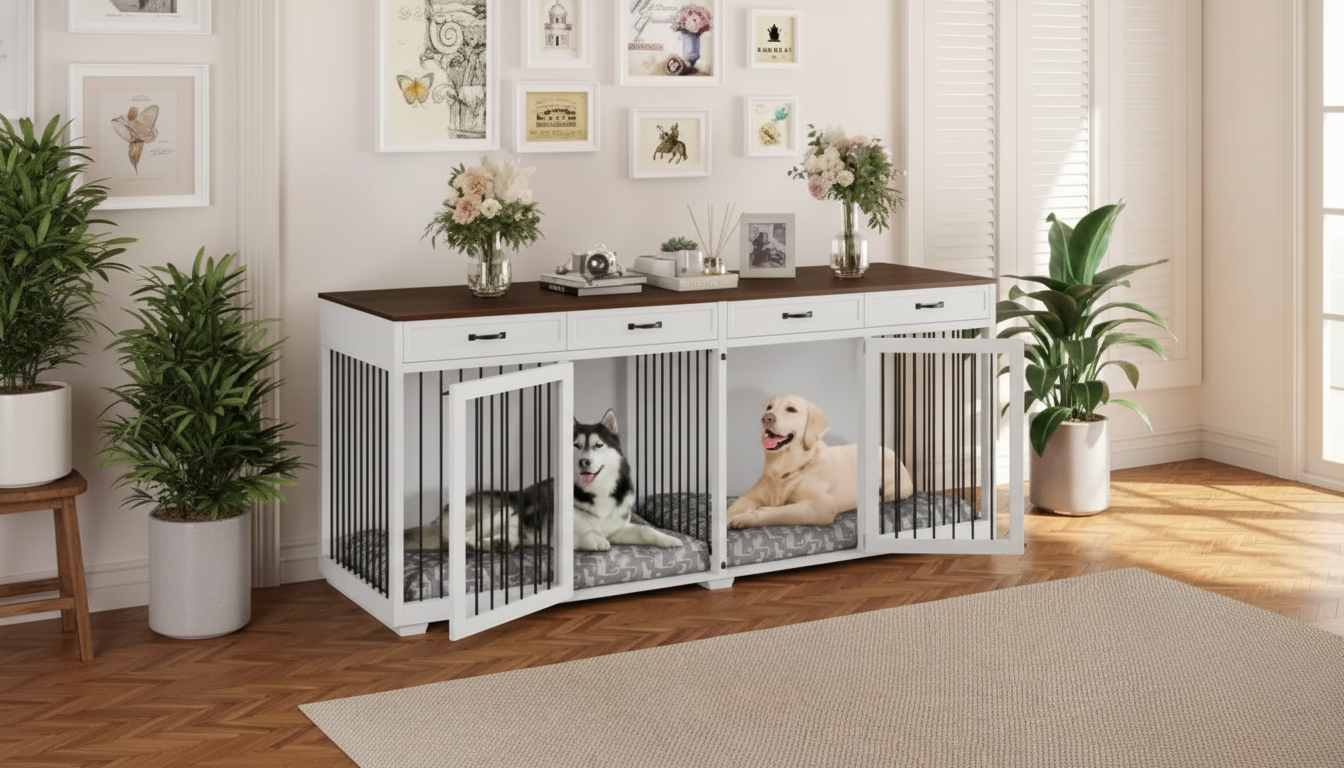
92.9″ Wooden Dog Crate Furniture with Divider and 4 Drawers: Spacious, Organized, and Home-Ready
A large crate can do more than keep a dog safely contained—it can also add storage and day-to-day function to a living space. This 92.9″ wooden dog crate furniture piece combines a roomy interior with a divider for flexible sizing and four drawers for everyday essentials, making it easier to keep leashes, treats, grooming tools, and cleaning supplies in one place. The result is a dedicated “dog zone” that looks intentional in the home instead of temporary.
What This Crate Furniture Is Designed to Solve
Big dogs and busy households often outgrow the basic wire crate setup—especially when supplies start migrating to countertops, entry tables, and random bins. A furniture-style crate aims to keep the dog comfortable while helping the room stay organized.
- Creates a dedicated, den-like space while blending with home furniture
- Helps manage multi-dog households or a growing dog with an adjustable divider
- Reduces clutter with built-in drawers for supplies that usually end up on counters
- Provides a wide top surface that can function like a console or sideboard
At-a-Glance Features and Who It Fits Best
The standout advantage of a 92.9″ crate is flexibility: more interior length to work with, plus a divider that can split the space or tailor it to your routine. The four drawers keep the things you reach for daily close at hand—without adding another storage unit to the room.
- Extra-long 92.9″ footprint suited for larger rooms and open layouts
- Divider supports two zones or one zone adjusted to preferred crate length
- Four drawers keep daily items accessible without adding separate storage bins
- Furniture-style build intended for indoor use where appearance matters
Quick Feature Summary
| Feature | Why it matters | Best for |
|---|---|---|
| 92.9″ overall length | Maximizes interior space while offering a substantial top surface | Large breeds or households that want a console-style footprint |
| Interior divider | Adjusts usable space; can help with training or separating areas | Growing dogs, two-dog routines, flexible setups |
| 4 drawers | Dedicated storage for accessories and care items | Homes trying to reduce pet clutter |
| Wooden furniture form | Blends with décor better than wire crates alone | Living rooms, dens, entryways |
Understanding Size, Layout, and Placement
A long crate furniture piece behaves more like a sideboard than a simple kennel, so placement matters. Before committing to a spot, treat it like any substantial furniture purchase: measure carefully, picture door and drawer swing, and protect your traffic flow.
- Measure the intended floor area and walking clearance; long crates function best where doors can open freely.
- Leave breathing room around vents and walls to maintain airflow and help protect baseboards.
- Place away from direct heat sources and strong drafts for comfort.
- Consider noise and traffic: many dogs relax best where family activity is visible but not chaotic.
If the crate will sit in an entryway, ensure the drawers can open without bumping into shoes, umbrellas, or a door swing. In living rooms, the wide top can work well behind a sofa or along a wall as a console—just keep enough clearance so the dog’s access doors aren’t blocked by furniture.
Divider and Drawer Setup Tips for Everyday Use
The divider is the difference between “very large” and “usefully configurable.” Done well, it helps the crate feel secure now and adaptable later. The drawers help keep routines consistent—especially for households juggling walks, training rewards, and cleanup supplies.
- Use the divider to right-size the space so the dog can stand, turn, and lie down comfortably without feeling lost in a large interior.
- For multi-dog routines, plan separate feeding and water times outside the crate to reduce resource guarding inside shared furniture-style crates.
- Assign drawers by purpose (walks, feeding, grooming, cleaning) to keep routines consistent.
- Store only pet-safe items in drawers; keep medications secured and out of reach.
A simple drawer system that stays stable over time: top-left for leashes and waste bags, top-right for treats/training pouch, bottom-left for grooming wipes/brush, bottom-right for cleaning spray and paper towels (with any chemicals stored safely and used according to label directions).
Safety and Comfort Checklist
A furniture-style crate still needs the same basic safety checks as any enclosure. Before your dog spends real time inside, do a quick walkthrough to reduce snag risks and prevent stressful early experiences.
For training fundamentals and pacing, refer to guidance from the American Veterinary Medical Association (AVMA) and the American Kennel Club (AKC).
Cleaning and Maintenance for Wooden Crate Furniture
When This Style Makes Sense (and When It Doesn’t)
Common Buying Questions to Consider Before Ordering
More Home & Routine Finds (In Stock)
- Vintage Glass Pendant Light with LED Compatibility for Indoor and Outdoor Spaces
- Simple Daily Rituals to Soothe Your Mind – Digital Guide
- Solo Traveler’s Guide to Staying Safe | Digital Download
FAQ
How should the divider be positioned for a growing dog?
Set the divider so the dog can stand, turn around, and lie down comfortably, then gradually increase the usable area as your dog grows. Avoid making the space so large early on that housetraining routines become inconsistent.
Can the drawers be used for food and treats?
Yes—store food and treats in sealed containers to help maintain freshness and deter pests. Keep medications and any hazardous items secured and out of reach.
What’s the best place to put a furniture-style crate in the home?
Choose a quiet-but-social spot with good airflow and enough clearance for doors and drawers to open fully. Avoid placing it near direct heat, strong drafts, or tight hallways where traffic can feel stressful.












Leave a comment