5-Tier Cat Tree Tower: Stable Climbing & Scratching
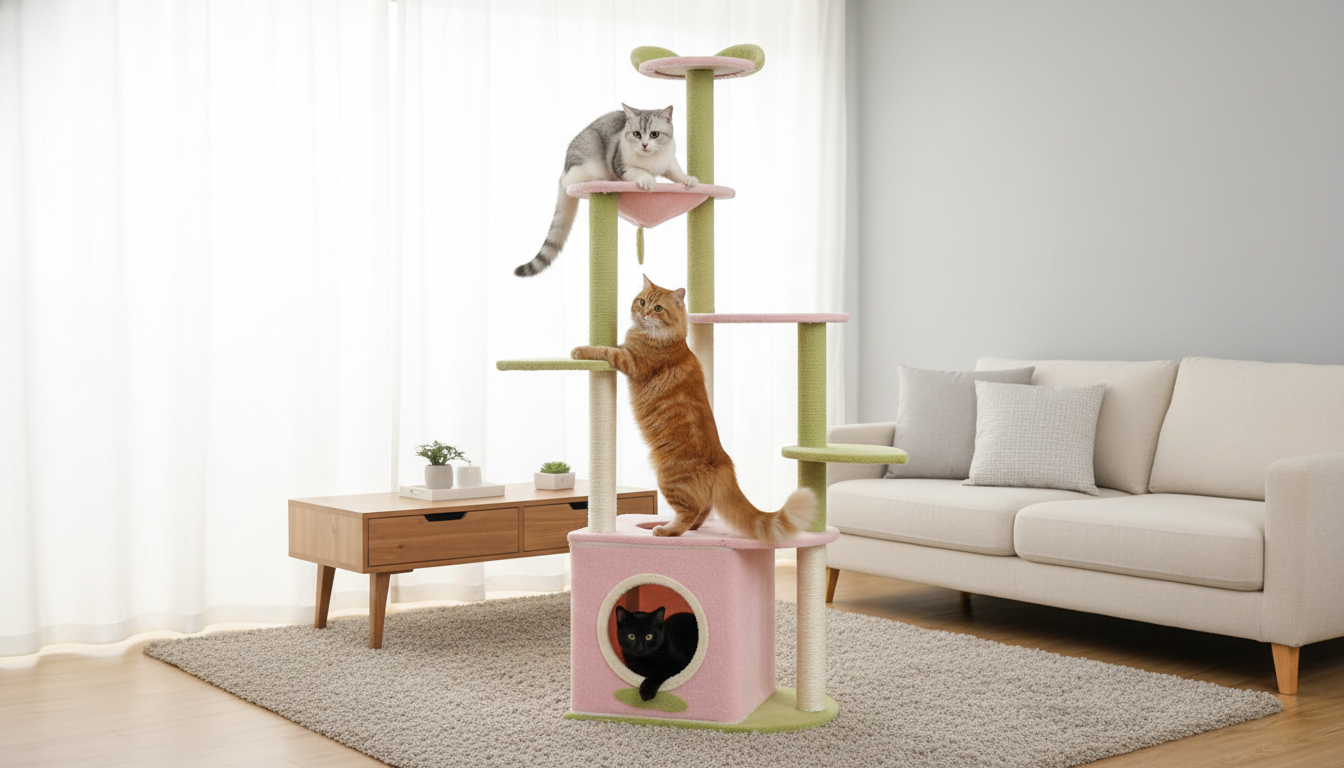
5-Tier Cat Tree Tower for Large Cats – Activity Center with Scratching Posts
A tall cat tree can turn one corner of a room into a daily climbing, scratching, and lounging zone—especially helpful for larger cats that need stable platforms and multiple rest spots. This 5-tier tower is designed to support active play, encourage healthy scratching habits, and give cats vertical space to perch and feel secure.
What This 5-Tier Tower Adds to a Home
Cats experience a room in layers. When they have safe vertical options, they’re more likely to settle, observe, and play in ways that feel natural—without recruiting your shelves and countertops as their personal lookout posts.
- Creates vertical territory so cats can perch higher without using shelves or counters
- Combines multiple behaviors in one footprint: climbing, resting, scratching, and watching
- Gives multi-cat households more “zones” to reduce crowding around a single bed or scratcher
- Helps redirect scratching away from carpets and furniture by offering dedicated posts
For indoor cats, these “activity center” setups also support enrichment fundamentals—places to climb, hide, rest, and monitor the environment. Helpful guidance on feline home environments can be found through the American Association of Feline Practitioners (AAFP) Feline Environmental Needs Guidelines and International Cat Care’s enrichment recommendations.
At-a-Glance: Features and Best Uses
A 5-tier layout tends to be easier for cats to navigate than a design that requires one big jump to reach a top bed. The step-by-step climb matters for confidence, especially for heavier cats, seniors, or cats returning to activity after a quiet stretch.
- Five levels encourage step-by-step climbing rather than one big leap
- Scratching posts provide a daily outlet for claw maintenance and stretching
- Multiple perches support rotation: nap, observe, groom, repeat
- Works well as a window-side activity center when placed near natural light
Quick Fit Guide
| Feature | Why it matters | Best for |
|---|---|---|
| 5-tier vertical layout | Adds climbing and lookout points without taking over floor space | Active cats, apartments, homes with limited square footage |
| Scratching posts | Supports healthy scratching and can reduce furniture scratching | Cats that scratch rugs, sofa arms, or door frames |
| Multiple rest spots | Encourages naps and reduces competition in multi-cat homes | Two-cat homes, cats that like variety |
| Sturdy tower style | More confidence for heavier cats when climbing and turning | Large cats, adult cats, households wanting stability |
| Activity-center setup | Supports play, observation, and decompression in one area | Indoor-only cats needing enrichment |
Who It’s For (and When to Consider Another Setup)
- Large cats that benefit from stable platforms and a predictable climb path between levels
- Indoor cats that need additional exercise opportunities beyond floor toys
- Cats that like being near people but prefer an elevated perch
- Multi-cat homes where a single bed or scratcher causes tension
- Consider a wall-mounted climbing system instead if floor space is extremely limited or if a cat prefers long horizontal runs
If you have a cat that startles easily, a tower can also function as a “safe station”—a place to retreat that still allows them to monitor the room. That sense of control can reduce conflict in multi-cat homes and cut down on restless pacing.
Placement Tips for Better Daily Use
Placement often determines whether a cat tree becomes a favorite hangout or a rarely-used piece of furniture. Cats generally prefer clear sight lines, predictable approach routes, and a stable feel underfoot.
- Place in a low-traffic corner so cats can relax without being startled
- Position near a window for natural “cat TV” and longer perch time
- Keep one side close to a wall for a more secure feel and reduced wobble
- Avoid placing directly next to fragile décor that could be knocked during zoomies
- If the cat is hesitant, start with treats on the lowest tier and gradually reward higher climbs
A practical test: stand where the tower will go and imagine a fast cat launching onto it. If the landing area is cramped or cluttered, a small move (even 8–12 inches) can make the tower feel more “approachable.”
Helping Cats Use the Scratching Posts Consistently
Scratching is normal—it’s how cats stretch, maintain claws, and leave scent cues. The goal isn’t to stop scratching; it’s to make the “right spot” the easiest and most rewarding option.
Assembly, Stability, and Care
A Simple Routine to Keep It Interesting
For more ideas, the ASPCA’s cat enrichment guidance offers practical ways to add variety without overwhelming your cat.
Related Finds (Available Now)
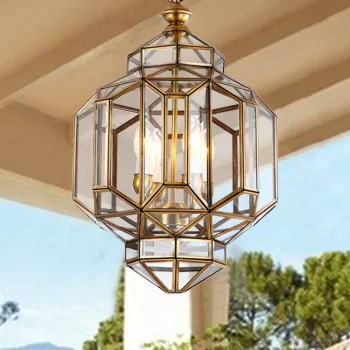
- Vintage Glass Pendant Light with LED Compatibility for Indoor and Outdoor Spaces
- Simple Daily Rituals to Soothe Your Mind – Digital Guide
- Solo Traveler’s Guide to Staying Safe (Digital Download)
FAQ
Is a 5-tier cat tree suitable for large cats?
Yes, a multi-level tower can work well for large cats when the structure is sturdy, the steps between tiers feel manageable, and the hardware stays tight. Place it on a flat surface, check for wobble before use, and monitor the first few climbs to confirm confidence and stability.
How do you get a cat to use the scratching posts instead of furniture?
Put the tower close to the cat’s current scratching spot, then reward early use with treats, catnip, or a short play session. While the new habit forms, temporarily cover or block the preferred furniture scratch area to make the post the easiest option.
Where is the best place to put a cat tree tower?
A quiet corner near a window is ideal, away from heavy foot traffic, with at least one side near a wall for a more secure feel. Cats tend to use towers more when they have a view of the room and a calm approach path.













Leave a comment