4-Channel RGB XLR Audio Mixer for Streamers & Podcasters
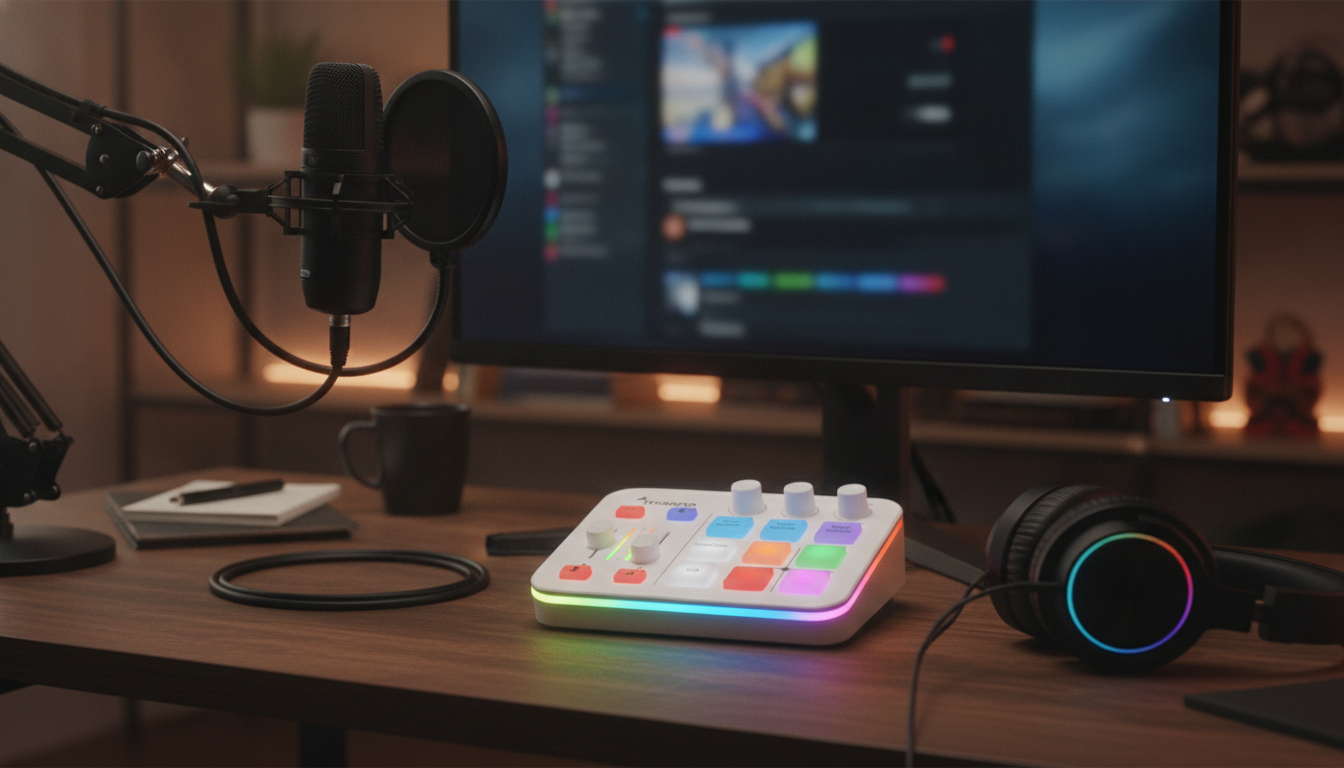
RGB Audio Mixer with XLR: A 4-Channel Control Hub for Streaming, Gaming, and Podcasts
A compact mixer can clean up a messy audio chain by giving microphones, game/PC audio, music, and chat their own faders—plus quick access to mute, monitoring, and tone shaping. An RGB audio mixer with an XLR interface and four channels is designed to sit at the center of a creator setup, keeping levels consistent and making live adjustments fast without diving into software menus. For more guidance, see CTE Course Strands and Standards Drafts for approval ….
What a 4-Channel RGB XLR Mixer Does in a Creator Setup
A four-channel mixer is essentially a small “control room” for your desk: it gathers multiple audio sources, lets you shape and balance them, and then sends a clean output to your stream, recording app, or speakers. For further reading, see 3.
- Combines multiple sources—mic, PC/game audio, voice chat, music, console, or phone—into a controlled output for stream or recording.
- Provides physical faders/knobs for quick level changes during live moments (hype spikes, loud teammates, quiet guests).
- Adds a dedicated XLR mic path for more stable connections than many 3.5 mm headset inputs.
- Uses RGB lighting as a visibility aid in low light and as quick status feedback (levels/mute scenes depending on design).
- Reduces reliance on software mixing by centralizing gain staging, monitoring, and routing.
| Option | Best for | Limitations to expect |
|---|---|---|
| 4-channel RGB mixer with XLR | Streaming + gaming + podcasting with multiple live sources | Requires basic gain staging knowledge; desk space and extra cables |
| Single-input USB microphone | Simple solo streams and calls | Harder to balance game/music/chat separately; limited upgrade path |
| Small 2-channel interface | Clean mic capture + one extra input | Often lacks quick live mix controls and multi-source routing |
| Software-only mixer | Budget setups with time to configure | Hotkeys and routing can fail mid-stream; harder to adjust by feel |
Core Controls That Matter Day-to-Day
Specs are useful, but the controls you touch every session are what make a mixer feel effortless during a live stream or a multi-take podcast edit.
- XLR microphone input: supports a wide range of dynamic and condenser mics depending on available phantom power (verify if 48V is included).
- Gain control and channel level: gain sets the input sensitivity; the fader/level knob sets the mix balance.
- Headphone monitoring: enables real-time listening to catch clipping, hum, and background noise before the audience does.
- Mute and quick level drops: essential for coughs, keyboard noise spikes, or switching between gameplay and talking segments.
- Basic EQ/tone shaping (if included): helps improve clarity (presence) and reduce muddiness for speech-focused content.
For deeper mic fundamentals—like why certain mics reject background noise better than others—Shure’s overview is a solid reference: Shure: Microphone Basics.
Understanding the XLR Channel and Mic Compatibility
The XLR channel is where many creator setups take a big step up, mainly because it opens the door to common broadcast-style microphones and more robust cabling.
- Dynamic microphones: typically need more gain but are forgiving in untreated rooms; good for gaming desks and noisy environments.
- Condenser microphones: often need 48V phantom power; can sound detailed but may capture more room noise.
- Balanced XLR cabling: reduces interference over longer runs compared with unbalanced cables, useful around PCs, monitors, and power bricks.
- Mic technique still matters: consistent mouth-to-mic distance and speaking angle can outperform expensive gear with poor placement.
Routing and Source Ideas for Four Channels
The biggest quality-of-life improvement with four channels is separation. When each source has its own lane, your voice stays intelligible while everything else stays controlled.
- Channel plan for streamers: XLR mic (voice), PC/game audio, voice chat (Discord), music/alerts or a phone input for calls.
- Channel plan for podcasters: host mic (XLR), guest mic (if supported via additional input type), playback/remote guest audio, and a soundboard channel.
- Channel plan for console gaming: mic + console audio + PC/Discord + music/secondary device.
- Build a “panic path”: keep one channel reserved for a backup mic or phone hotspot audio if the main source fails.
If your workflow includes OBS, it helps to know exactly how your mixer shows up to the system and how monitoring is configured. See: OBS Studio Documentation.
RGB Lighting: Practical Benefits Beyond Looks
For a cleaner on-camera background (and easier knob reads), pairing your desk with a warm accent fixture can help your space look intentional while you work. An option to consider is the Vintage Glass Pendant Light with LED Compatibility for Indoor and Outdoor Spaces.
Quick Setup Checklist (PC Streaming, Gaming, or Podcast Recording)
Common Audio Problems and Fast Fixes
A Solid Pick for a Multi-Source Desk Setup
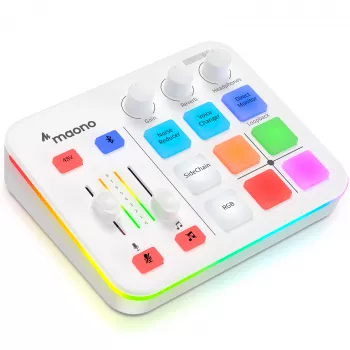
For a ready-to-run option, see the RGB Audio Mixer for Streaming, Gaming & Podcasts with XLR Interface, 4-Channel (in stock).
FAQ
Does an XLR mixer automatically work as a USB audio interface for a PC?
No—some mixers include built-in USB audio (showing up as an input/output device in your computer), while others are analog-only and need a separate interface or line-in. Check the connection types and confirm whether your OS and apps (like OBS or a DAW) detect it as an audio device.
Will it power a condenser microphone with 48V phantom power?
Not always. Phantom power is a feature that must be specifically supported, so verify 48V in the product specs; dynamic microphones don’t require phantom power.
How should the four channels be arranged for streaming with Discord and game audio?
A practical layout is: XLR mic on its own channel, game/PC audio on another, Discord/chat on another, and music/alerts or a phone input on the fourth. This keeps voice clear and makes it easy to mute or pull down chat instantly during loud moments.












Leave a comment