4-Tier Cat Tree House: Scratch Posts & Jump Platforms
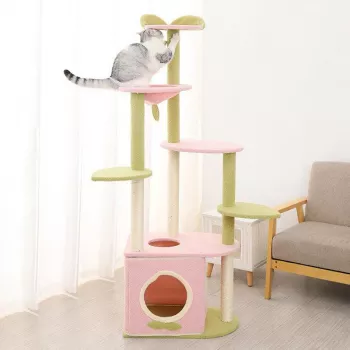
4-Tier Cat Tree House with Scratching Posts and Jumping Platforms
A multi-level cat tree can turn a corner of a room into a climbing, scratching, and lounging zone that helps protect furniture while supporting daily activity. This 4-tier design combines a cozy hideout with vertical platforms and dedicated scratching areas to encourage natural behaviors like climbing, perching, stretching, and marking. When the layout is easy to “read” (step-by-step platforms, scratch zones on the route, and a stable base), many cats will choose it over the sofa arm or the rug edge—because it simply fits what they already want to do. For more guidance, see 7 Expert Tips to Help You Find the Right Cat Tree – Consumer Reports.
What a 4-tier setup adds to a cat’s day
A well-planned four-level tower offers more than height—it creates a predictable routine of movement and rest that cats can repeat throughout the day. For further reading, see New Cat Condos 140002-Neutral Multi Level Large Cat Gym Cat Tree.
- Vertical space supports climbing and jumping, which many cats prefer to floor-level play.
- A higher perch can act as a confidence booster for shy cats and a lookout spot for curious cats.
- A designated scratch surface helps redirect clawing away from sofas, rugs, and doorframes.
- A covered house-style nook provides an off-duty rest spot that feels sheltered.
- Multiple tiers can reduce friction in multi-cat homes by offering more than one preferred resting level.
These benefits align with widely recommended enrichment principles—especially giving cats choices, vertical territory, and appropriate outlets for scratching and play. For more detail on setting up an environment that supports feline wellbeing, see the American Association of Feline Practitioners (AAFP) Feline Environmental Needs Guidelines and the ASPCA’s cat enrichment guidance.
Core components to look for in this style of cat tree
Not all 4-tier trees feel the same in daily use. The most “popular” ones (from a cat’s perspective) usually share a few practical details.
- Scratching posts positioned along the climbing route so scratching happens naturally while moving between levels.
- Jumping platforms with enough surface area for stable landings and comfortable perching.
- A house or cubby that’s easy to access (not so tight that larger cats avoid it).
- A base that resists tipping when a cat launches upward or lands with speed.
- Covering materials that feel pleasant for lounging and are practical to clean.
One simple test: imagine your cat moving through it at “zoomies” speed. If a jump requires a weird sideways twist, or if the tree would rock when a cat hits the top perch with momentum, it’s not set up for confident use.
Feature map: tiers, scratching, and hangout zones
Think of the four tiers as a route rather than separate pieces of furniture. Cats often repeat the same paths—up, across, down—especially when that path includes a scratch and a lookout.
- Use the tiers as a simple “route”: start at the lowest platform, move up step-by-step, then finish at the highest perch.
- Aim to keep at least one tier as a calmer resting spot and another as an active jump zone.
- Place scratch posts where a cat naturally stretches—near the base and along mid-level transitions.
- If multiple cats use it, encourage “separate favorites” by adding a small blanket or toy to different levels.
How each element is typically used
| Element | Best for | Placement tip | What to check before buying |
|---|---|---|---|
| Scratching posts | Stretching, claw maintenance, scent marking | Along the main climb path and near entry/exit points | Post height and sturdiness; replaceable rope or durable wrap if listed |
| Jumping platforms | Leaping practice, perching, play bursts | Staggered so jumps feel natural rather than forced | Surface space, edge stability, and traction |
| House/cubby | Hiding, napping, decompression | Mid-level or lower level for easy access | Opening size and interior room; ventilation |
| Top perch | Observing, relaxing, feeling secure | Near a window or calm wall side | Stability and comfort; not wobbling under movement |
| Base | Overall safety and wobble resistance | Flat, non-slippery floor area | Footprint size and weight; anti-tip hardware if provided |
Choosing the right spot at home
Placement can make the difference between a cat tree that gets used daily and one that feels like décor. Many cats treat a tower as both “exercise equipment” and “security system.”
Stability and safety checks before daily use
Keeping it clean and appealing
Who this 4-tier style suits best
Extras for a cat-friendly home (in stock)
- Vintage Glass Pendant Light with LED Compatibility for Indoor and Outdoor Spaces — a warm lighting option that can help make a cozy “cat corner” near the tree feel intentional.
- Simple Daily Rituals to Soothe Your Mind – Digital Guide — helpful if the cat tree is part of building calmer daily routines at home.
- Solo Traveler’s Guide to Staying Safe | Digital Download PDF eBook — useful planning resource when arranging pet care and home safety while away.
FAQ
How many cats can use a 4-tier cat tree comfortably?
It depends on each cat’s size and how willing they are to share space. Multiple levels help, but some cats still prefer a single “claimed” perch, so watch for crowding and provide an additional resting spot if tension shows up.
Where should scratching posts be positioned to reduce furniture scratching?
Place posts near the locations your cat already scratches and along the routes they naturally take—like near the tree’s first platform and mid-level transitions. Reinforce use with brief praise or treats, and consistently redirect paws to the post when scratching starts elsewhere.
How often should a cat tree be tightened or checked for stability?
Check it right after assembly, again after the first week of use, and then monthly—or any time you notice wobble. High-energy cats or multi-cat households may need more frequent checks because the hardware can loosen faster under repeated jumping.












Leave a comment