4-Week Puppy Training Plan: Potty, Cues & Socialization
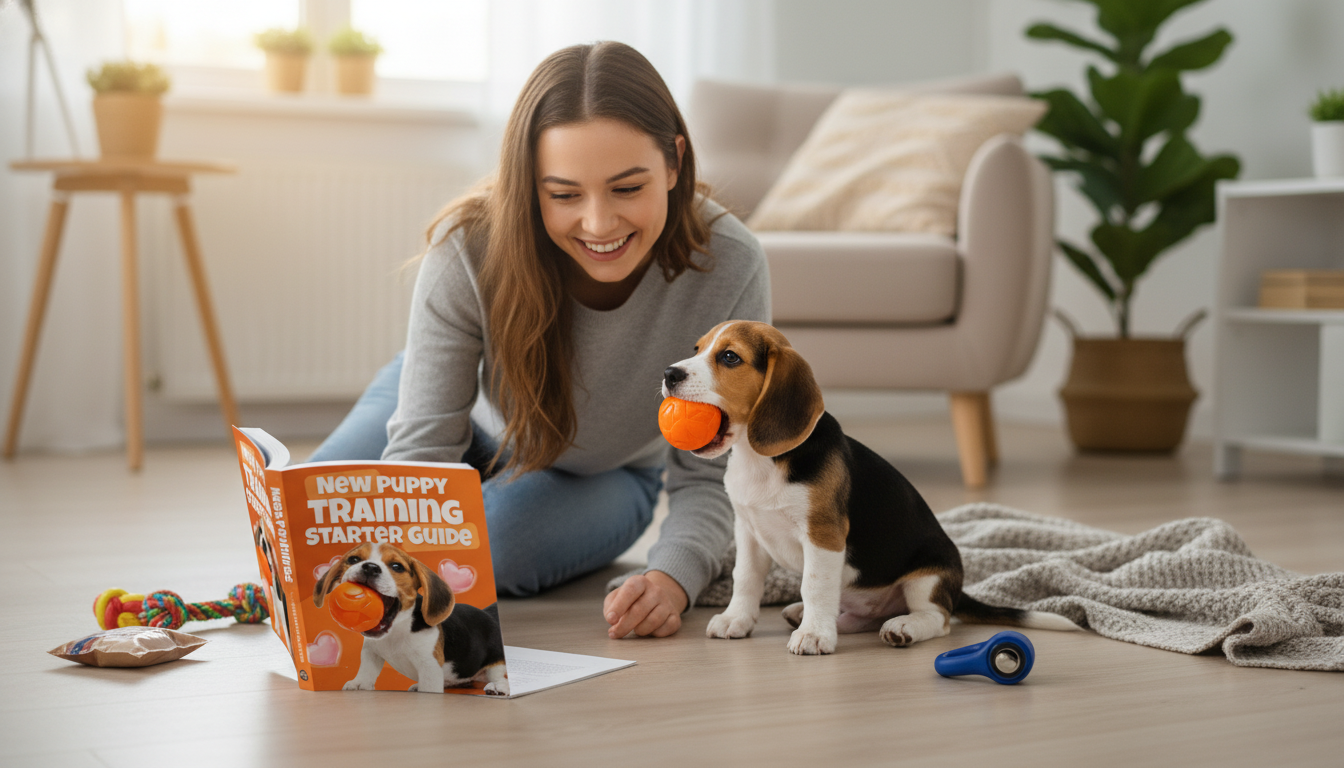
New Puppy Training Starter Guide: A 4-Week Routine for House-Training, Basics, and Social Confidence
The first month with a puppy sets the tone for years. A simple routine—paired with short, consistent training sessions—can prevent common problems like accidents indoors, mouthy play, and fear during socialization. This starter guide lays out a practical 4-week plan with daily rhythm ideas, house-training steps, foundational cues, and social exposure goals that keep progress steady without overwhelming a new puppy (or the household).
Before Training Starts: Set Up the Home for Easy Wins
Good training is easier when the environment does half the work. Before focusing on cues, set up management so your puppy can’t rehearse the habits you don’t want.
- Pick a confinement plan: crate, exercise pen, or a puppy-proofed room. Consistency matters more than the option you choose.
- Gather essentials: appropriately sized crate, enzymatic cleaner, treat pouch, chew toys, long line (10–15 ft), baby gates, and a comfortable harness/collar with ID.
- Decide “default rules” now: where the puppy sleeps, furniture access, feeding schedule—avoid shifting boundaries.
- Choose one potty spot outdoors: add a simple potty cue and use the same door/path when possible.
- Keep sessions tiny: 1–3 minutes, several times a day, to match puppy attention spans.
Daily Rhythm Example for a Young Puppy (Adjust to Age and Vet Guidance)
| Time Block | What to Do | Training Focus |
|---|---|---|
| Wake-up | Potty trip immediately, quiet praise | Reinforce potty cue + reward outside |
| Breakfast | Meal + water, then short calm time | Hand-feed a few bites for name response |
| Play/Train | 5–10 minutes play, 1–3 minutes training | Sit/down/come (low distraction) |
| Nap/Crate | Crate/pen nap | Practice brief alone time |
| Midday | Potty, sniff walk or yard time | Loose-leash skills + “leave it” foundation |
| Evening | Dinner, potty, gentle play | Settle on mat + handling practice |
| Bedtime | Final potty, crate/pen sleep | Quiet routine and predictable lights-out |
House-Training: A Clear System for Fewer Accidents
House-training works best as a simple system: management, schedule, and fast rewards. Corrections are optional; consistency is not.
- Use management first: the puppy is supervised, in a pen/crate, or tethered to you. Most accidents happen during “just a minute” roaming.
- Go out on a schedule: after waking, after eating/drinking, after play, after training, and before naps/bedtime.
- Reward immediately outdoors: within 1–2 seconds of finishing. The timing teaches faster than excitement.
- If an accident happens: interrupt gently, take the puppy outside, then clean indoors with enzymatic cleaner (skip ammonia-based products).
- Track patterns for a week: note times, triggers, and locations, then adjust the schedule instead of adding pressure.
- Overnight strategy: last potty right before bed; set an alarm if needed; gradually extend time between trips as your puppy matures.
For a detailed, humane approach to setting a schedule and preventing repeat accidents, the Humane Society’s house-training guide is a helpful reference.
Week-by-Week Plan (4 Weeks) That Builds Skills Without Rushing
Think “stacking wins.” Each week adds only a few skills while protecting the routines that prevent chaos.
4-Week Skill Focus Snapshot
| Week | Primary Goals | Daily Minimum |
|---|---|---|
| 1 | Potty routine, crate calm, name, handling | 6–10 potty trips + 3 micro-sessions |
| 2 | Sit/down/touch, come games, settle | 3 micro-sessions + 1 short sniff walk |
| 3 | Leave it/drop it, greetings, leash basics | Practice impulse control at meals + 3 micro-sessions |
| 4 | Practice in new places, longer calm periods | 1–2 mini outings + reinforce recall indoors |
Essential Commands: What to Teach First and How to Practice
If you want a broader timeline of what’s realistic by age, the American Kennel Club’s puppy training resources provide helpful benchmarks.
Socialization Done Right: Confidence Without Overwhelm
For guidance on why early, positive social exposure matters (and how to do it safely), review the AVSAB position statement on puppy socialization.
A Printable Plan for Busy Days
Quick Daily Checklist (Printable-Style)
| Habit | Done (AM/PM) | Notes |
|---|---|---|
| Potty after waking/meal/play | Track accident triggers | |
| 3 micro training sessions | 1–3 minutes each | |
| Crate/pen calm time | Build duration slowly | |
| 1 social exposure | End on calm note | |
| Enrichment/chew | Redirect mouthing |
Printable Training eBook Option: New Puppy Training Starter Guide
If a fridge-friendly plan helps you stay consistent, New Puppy Training Starter Guide (printable 4-week routine) is designed as a beginner-friendly resource centered on a 4-week routine with practical priorities for house-training, core cues, and confidence-building.
For households doing lots of short practice walks during training, supportive footwear can make consistency easier—consider Alviero Martini Prima Classe Men’s Leather Sneakers – White Spring/Summer Shoes for everyday outings, and keep small essentials handy with a simple accessory like the Men’s Genuine Leather Belt – Classic 1.5 Inch Retro Business & Casual Strap (useful if you clip on a treat pouch during training).
FAQ
How long does it usually take to house-train a puppy?
Many puppies improve in a few weeks, but reliable house-training often takes a few months depending on age, schedule consistency, and supervision. If frequent accidents continue despite a solid routine, check with a veterinarian to rule out medical issues.
What should a puppy learn first: sit, crate training, or potty training?
Start with potty routine and crate/pen comfort because they support safety, supervision, and fewer accidents. Then add easy “game” skills like name response and sit in 1–3 minute sessions that fit naturally into the day.
How much socialization does a puppy need each day?
A few minutes of calm, positive exposure is often enough when it’s consistent and paired with treats. Focus on quality over quantity, and increase distance or end the session if you see stress signs like freezing, tucked tail, or repeated attempts to retreat.















Leave a comment