3L Vertical Sausage Stuffer: Even Filling, 3 Tubes
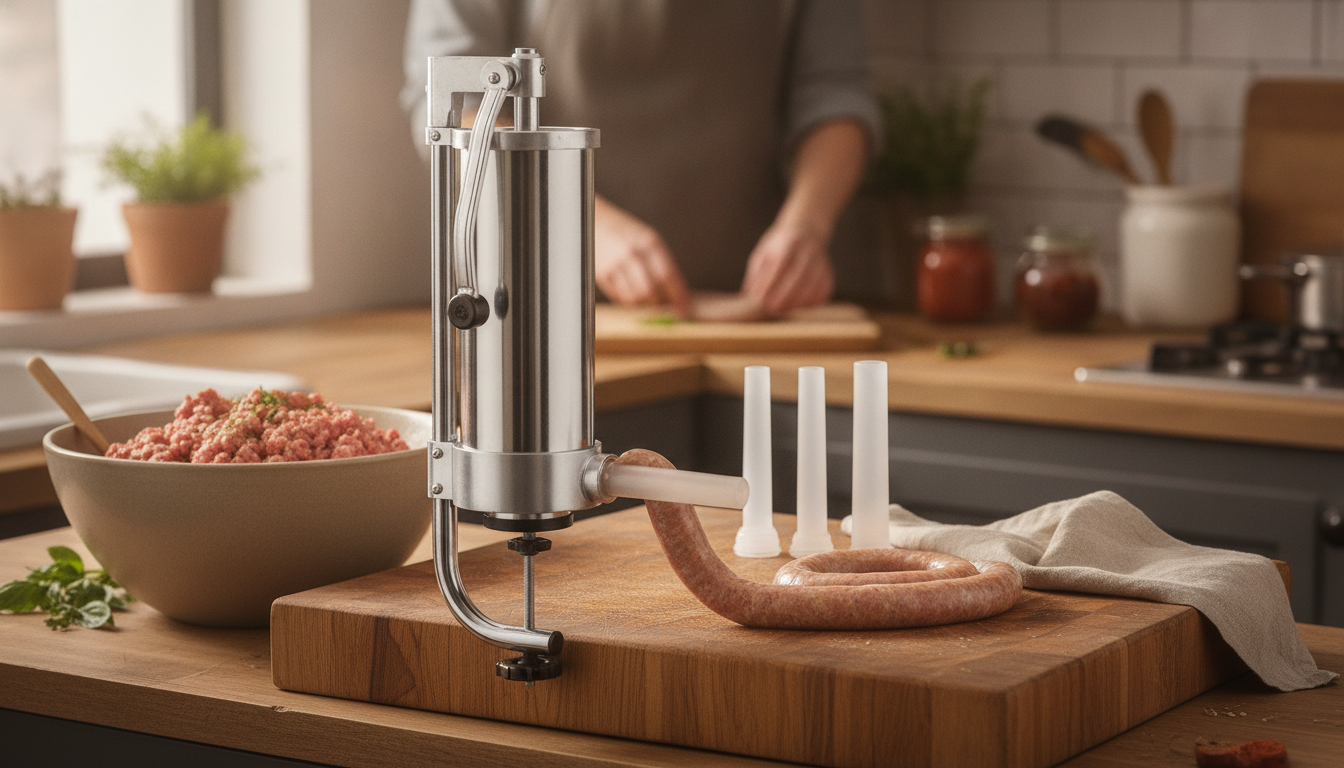
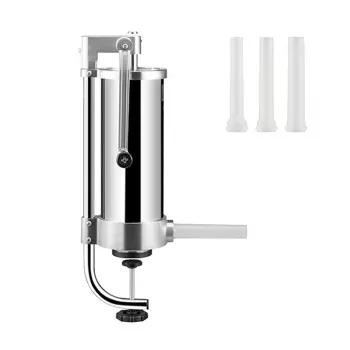
Vertical Sausage Stuffer with 3L Capacity & 3 Stuffing Tubes
A vertical sausage stuffer is built for steady, controlled filling—helping keep mixtures packed, reduce air pockets, and make links more uniform. This 3L model keeps your setup compact while providing a stable base for cranking and portioning. With three included stuffing tubes, it’s ready for common casing sizes used for breakfast links, bratwurst-style sausages, and thicker varieties.
What this stuffer helps with
- More consistent fill pressure than hand-filling with funnels or improvised tools
- Better control over speed and portioning to reduce blowouts and uneven links
- Easier handling of sticky or coarse-grind mixes with less mess on the counter
- Versatility from multiple tube sizes for different casings and styles
Capacity and stuffing tubes: choosing the right setup
A 3L capacity is a practical sweet spot for small-to-mid batches. It’s large enough to keep you moving without constant refills, but still manageable to load, chill, and clean—especially when you’re working with temperature-sensitive fat.
- 3L capacity supports small-to-mid batches without constant refilling
- Use a smaller tube for narrower casings and snack-size links; use a larger tube for thicker casings and faster filling
- Match tube size to casing diameter to avoid over-stretching, tearing, or excessive back-pressure
- If the casing feels hard to advance, switch to a smaller tube or slightly loosen the casing tension
As a quick rule: if you’re having to crank hard, something is resisting flow—often the tube is too large for the casing (or the casing is too dry), the mix is too warm and sticky, or the meat isn’t packed well in the canister.
Quick spec snapshot
Use the table below as a fast reference for planning batch size and tube selection. Also confirm workspace clearance—vertical stuffers need overhead space for loading and cleaning.
| Item | Details |
|---|---|
| Type | Vertical sausage stuffer |
| Capacity | 3L |
| Stuffing tubes | 3 tubes included |
| Product page | Vertical Sausage Stuffer with 3L Capacity & 3 Stuffing Tubes |
| Price | 77.51 USD |
| Availability | In stock |
How to use it for smooth, even links
Consistent links come from a simple workflow: prep the casings, keep the mixture cold, pack the canister firmly, and crank at a steady pace. That combination helps the meat feed evenly and keeps the casing from stretching too hard in one spot.
- Prep casings: rinse, soak as needed, and flush the inside so they slide onto the tube more easily
- Chill the mixture: colder meat fat stays firm, helping the stuffer feed cleanly and reducing smearing
- Load the canister firmly: press the mix down to minimize trapped air; smooth the top before installing the piston
- Prime the tube: crank until a small amount of mixture reaches the tube tip, then slide the casing on
- Fill with steady pressure: guide the casing with one hand while cranking with the other, keeping tension light and consistent
- Leave some slack: overfilling increases blowouts and makes twisting difficult
- Twist links after stuffing: portion evenly, then twist alternating directions to keep links from untwisting
If you’re aiming for very uniform links, mark your countertop with a rough length guide or weigh a few initial links to dial in your portioning rhythm before finishing the full batch.
Avoiding common problems (air pockets, blowouts, uneven fill)
Most stuffing issues trace back to air, temperature, or casing friction. A vertical stuffer improves control, but the biggest gains come from packing the canister well and avoiding sudden changes in cranking speed.
- Air pockets: pack the canister firmly; avoid reintroducing air when reloading; keep a steady crank speed
- Blowouts: don’t overfill; ensure casings are properly soaked; switch to a smaller tube if pressure is too high
- Uneven thickness: maintain gentle casing tension and consistent cranking; avoid sudden speed changes
- Fat smearing: keep meat and equipment cold; work in smaller batches if the room is warm
- Casing won’t advance: check that the tube isn’t too large, and that the casing isn’t sticking due to dryness
For tiny bubbles that show up after stuffing, pricking the casing with a sanitized pin can release trapped air without damaging the structure of the link.
Cleaning and care for food-safe use
Cleaning is easiest right after stuffing. Once residue dries inside a tube or around the piston, it takes more scrubbing and increases the chance of leftover odors.
Food safety basics for homemade sausage
For temperature guidance and thermometer best practices, reference the USDA FSIS resources at fsis.usda.gov and the FDA’s thermometer overview at fda.gov.
Who this 3L vertical stuffer fits best
More in-stock picks
- Vertical Sausage Stuffer with 3L Capacity & 3 Stuffing Tubes
- Vintage Glass Pendant Light with LED Compatibility for Indoor and Outdoor Spaces
- Only Women’s Blue Organic Cotton Skirt
FAQ
What casing sizes work with the three included tubes?
The three-tube set is meant to cover common small, medium, and larger casing needs. For best results, match the tube’s outside diameter to the casing so it slides on without overstretching; exact tube diameters can vary by model, so confirm the measurements on the product page before buying casings in bulk.
How much sausage can a 3L stuffer make in one load?
Three liters is roughly 3,000 milliliters of volume, which often lands around about 6–7 pounds of sausage mix depending on density and how much water or binder is in the recipe. Larger batches commonly require multiple loads, and that’s normal—especially when keeping meat cold between refills.
How do air pockets get reduced when using a vertical stuffer?
Air pockets are reduced by firmly packing the canister, priming the tube before loading the casing, and cranking at a steady pace to keep flow consistent. Keeping the mixture cold also helps it feed cleanly; if small bubbles appear, pricking them with a sanitized pin can release trapped air.












Leave a comment