Indoor Balance Beam & Stepping Stones for Toddlers
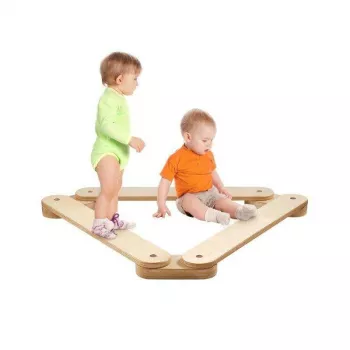
Wooden Balance Beam Stepping Stones for Kids – Montessori Toy for Toddlers
A wooden balance beam with stepping stones can turn everyday play into real movement practice—supporting balance, coordination, and confident body control. For toddlers and young kids, this kind of open-ended set fits naturally into indoor obstacle courses, calm sensory play, or energetic “follow the path” games that help children learn through hands-on movement. It’s the type of activity that invites repetition (which kids love) while quietly building the skills that make climbing, running, and safer navigation of the world feel easier. For more guidance, see Indoor Outdoor Sensory Toys Versatile Wooden Balance Beam ….
What this set helps kids practice
- Balance and posture control through slow, deliberate steps
- Gross motor coordination: stepping, turning, stopping, and starting
- Body awareness and spatial planning (where to place feet and how far to reach)
- Confidence building through repeatable, self-correcting challenges
- Early problem-solving by arranging pieces into new paths and patterns
Play-based movement is also strongly supported by child development guidance. The American Academy of Pediatrics highlights the value of play in healthy development, including building social-emotional and physical skills (AAP: The Power of Play). For age-by-age development reminders and safety-minded parenting tips, the CDC’s resources are a helpful reference (CDC Parenting Tips). For further reading, see Wooden Montessori kids toys | Baby Gifts | kidodidosss.
Montessori-aligned play ideas at different ages
This style of set works especially well when the child can repeat an activity, notice what went wrong, and adjust without constant correction. Keep the tone calm and invitational—more “try again” than “hurry up.”
- 18–24 months: Straight-line walks with an adult close by; practice stepping on and off safely.
- 2–3 years: Simple “follow the path” games; add pauses at each stone to practice control.
- 3–4 years: Create gentle curves and turns; introduce “quiet feet” (slow steps without stomping).
- 4+ years: Timed challenges, backward steps, or carrying a soft object to encourage stability.
- Make it child-led: Let kids set up the path and adjust difficulty independently.
Ways to set up an indoor obstacle course
The most successful indoor setups feel like a “yes space”: simple, uncluttered, and easy to reset. Start small so kids experience quick success, then add variety.
- Starter layout: Beam + stones in a short line with wide spacing.
- Adventure layout: Alternate stepping stones to the left and right to encourage lateral movement.
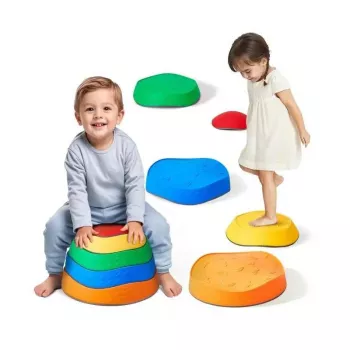
- “Island hop” layout: Stones only, spaced for comfortable stepping rather than jumping.
- Add-ons that pair well: Painter’s tape lines on the floor, cushions as “mountains,” a laundry basket as a “tunnel.”
- Clear the route: Keep pathways away from sharp edges and make sure landing areas are free of clutter.
To keep engagement high, give the layout a simple story: “cross the river,” “deliver the teddy,” or “tiptoe past the sleeping dragon.” The narrative helps kids slow down and focus on controlled steps.
Safety and comfort checklist for toddlers
Balance play should feel challenging in a satisfying way—not scary. A few setup habits make a big difference, especially for new walkers and enthusiastic climbers.
- Place on a flat, stable surface; avoid uneven rugs that slide easily.
- Use a soft landing zone nearby (foam mat or carpet) for early walkers.
- Supervise closely for toddlers; keep pets and siblings from darting into the path.
- Teach one-at-a-time turns to reduce bumps and hurried steps.
- Stop play if pieces wobble, splinter, or show damage; check joins/hardware if applicable.
Quick setup check before play
| Check | What to look for | Why it matters |
|---|---|---|
| Surface grip | No sliding or shifting when stepped on | Prevents slips and sudden loss of balance |
| Spacing | Comfortable step distance for the child’s stride | Supports confident, controlled movement |
| Clear area | No toys, cords, or furniture corners in the fall zone | Reduces trip and impact risks |
| Condition | Smooth edges, no cracks, no loose parts | Helps avoid splinters and pinches |
Choosing the right difficulty (without frustration)
The goal is steady practice and proud “I did it” moments. Use small adjustments to keep the challenge in the sweet spot.
Care, storage, and keeping the set looking new
Product options available now
Movement play pick
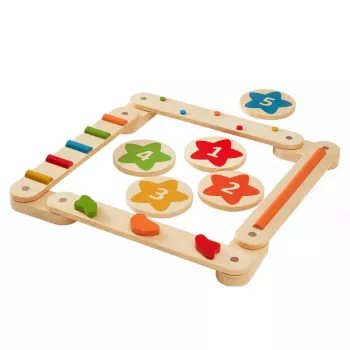
Wooden Balance Beam Stepping Stones for Kids – Montessori Toy for Toddlers is a movement-focused set designed for balance practice and open-ended obstacle-course play. It’s a strong fit for toddlers and young kids who enjoy stepping games and building their own paths—especially for playrooms, preschool motor stations, and rainy-day indoor activity.
Playroom upgrade (optional)
If you’re refreshing a play space, Vintage Glass Pendant Light with LED Compatibility for Indoor and Outdoor Spaces can be a practical add-on for brighter, more comfortable indoor play visibility—helpful when kids are practicing careful foot placement and “quiet feet” stepping.
FAQ
What age is a wooden balance beam and stepping stones set suitable for?
Many families use sets like this from about 18 months through early elementary years, with the exact start depending on walking stability and adult supervision. Younger toddlers do best with straight, widely spaced layouts and a soft landing area nearby.
Can this be used indoors without damaging floors?
Yes—use it on a flat surface, and consider placing a play mat or rug underneath for cushioning. Make sure the pieces don’t slide and quickly check that there’s no grit under them before each session to help protect hard floors.
How can difficulty be adjusted for different skill levels?
Change spacing, switch between straight and gently curved paths, or add pauses at each stone for control. Older kids can try backward steps or carry a soft object, with the focus kept on slow, steady movement rather than speed.












Leave a comment