Countertop Dishwasher with Water Tank: 5 Cycles, 360° Spray
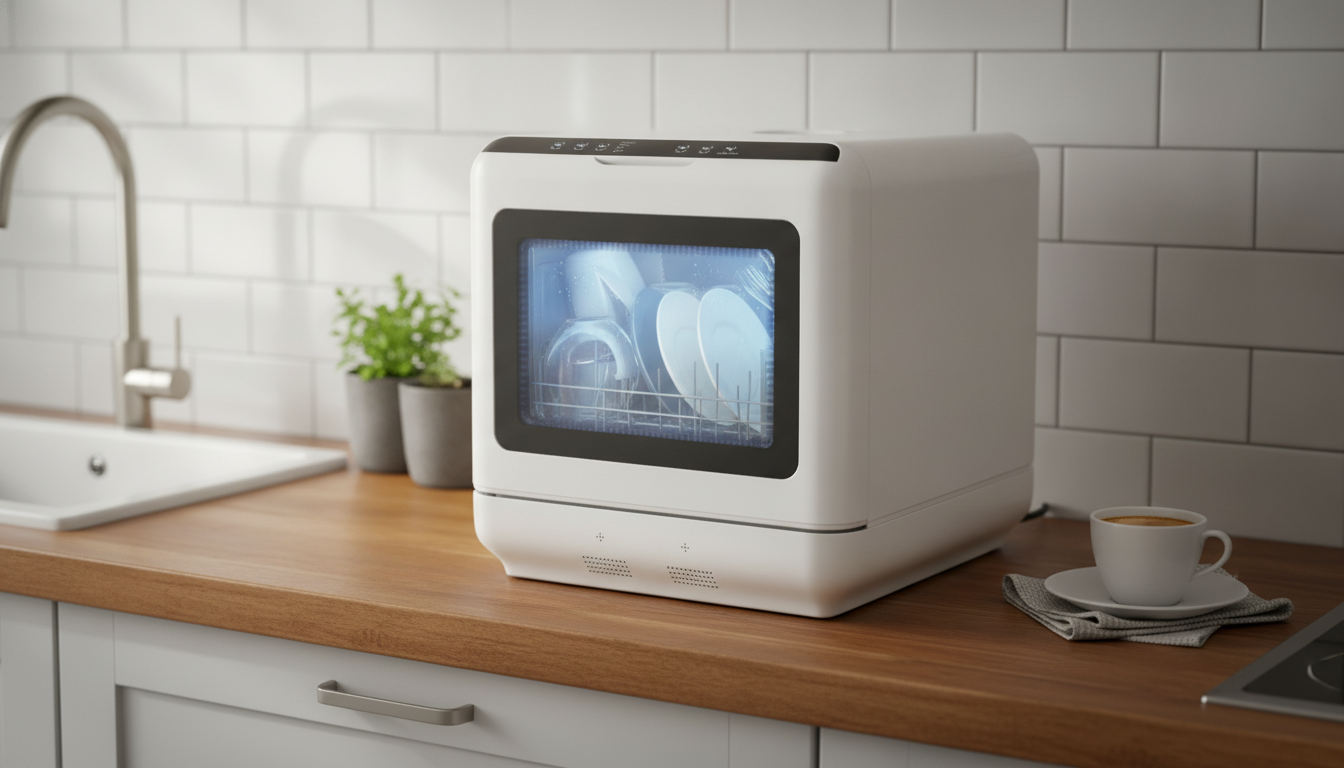
Compact Countertop Dishwasher with Built-in Water Tank and 5 Wash Cycles
A compact countertop dishwasher with a built-in water tank is made for everyday dish cleanup in places where square footage and plumbing access are limited. Instead of committing to a built-in appliance (or wrestling with a faucet adapter every time), you fill the tank, load the rack, add detergent, and start a cycle. With 360° spray coverage and multiple wash cycles, it’s a practical way to keep plates, cups, and utensils moving through the kitchen faster—especially in apartments, dorms, RVs, and temporary setups.
If you’re comparing small dishwashers, it also helps to keep expectations realistic: compact units are designed for light-to-moderate loads, smart loading habits, and routine filter care. When those basics are in place, countertop models can deliver consistently clean results and noticeably reduce sink time.
Who This Dishwasher Fits Best
- Small-space kitchens: countertops where a full-size dishwasher won’t fit.
- No-hookup scenarios: rentals, dorm rooms, basement suites, RV camping spots, or temporary kitchens.
- Light-to-moderate daily dish loads: couples, roommates, small families, and meal-prep routines.
- Busy schedules: quick cycle options for frequent resets of cups, bowls, and utensils.
- Anyone wanting less sink time: without committing to a built-in appliance.
Built-in Water Tank: What It Changes Day to Day
The built-in tank is the difference between “where can I connect this?” and “where can I place this?” You still need an electrical outlet and a plan for drainage, but you’re not dependent on a compatible faucet head or constant access to the sink.
- Flexible placement: use it where a direct faucet connection is inconvenient, as long as there’s power and a place for drainage.
- More predictable setup: you control the fill level at the unit, instead of relying on a faucet adapter each time.
- Useful for intermittent use: run it after meals, during events, or while the sink stays free for food prep.
- Practical for travel and mobile living: supports RV-style routines (always confirm power and drainage needs before relying on it full-time).
- Easy habit to keep: store a small pitcher or measuring container nearby to fill the tank quickly and reduce spills.
360° Cleaning Coverage and How to Load for Better Results
“360° spray” is most effective when water can actually reach every surface. Compact racks make loading technique more important than ever—small changes in angle and spacing can prevent stuck-on residue and cloudy film.
- Angle dishes toward the spray: plates and bowls should face inward/downward so water hits food-contact surfaces.
- Avoid nesting: separate bowls and spoons so spray can reach between items.
- Keep spray paths clear: tall items shouldn’t block the rotating spray pattern.
- Use the right detergent amount: too much can leave residue; too little can reduce grease removal.
- Pre-scrape, don’t pre-wash: remove solids and heavy sauces; a quick rinse is only needed for very sticky foods.
For food safety basics—especially when dishes sit for a while before washing—good kitchen hygiene habits matter as much as the cycle choice. The CDC’s guidance on safe food handling is a helpful reference for everyday routines: CDC — Kitchen hygiene and food safety basics.
Wash Cycles: Picking the Right One for Each Load
| Dish Type / Situation | Suggested Cycle Choice | Loading Tip |
|---|---|---|
| Everyday plates, bowls, cutlery | Standard / Normal | Angle plates toward spray; avoid nesting bowls |
| Greasy dishes or dried-on food | Intensive / Heavy | Don’t block spray arms; use proper detergent dose |
| Lightly used cups and snack plates | Quick / Rapid | Space items so water reaches interiors |
| Glassware and lighter items | Gentle / Glass | Stabilize items to prevent rattling |
| Freshen items between meals | Rinse / Pre-rinse (if available) | Use as a short interim cycle, not a full wash |
Setup, Drainage, and Countertop Practicalities
For broader context on efficiency labels and what they generally indicate, these resources are useful starting points: ENERGY STAR — Dishwashers and EPA — WaterSense.
Cleaning and Maintenance for Consistent Performance
Product Spotlight: Compact Countertop Dishwasher with Built-in Water Tank, 360° Cleaning, 5 Wash Cycles
If you’re setting up a small kitchen or upgrading an RV-style routine, the Compact Countertop Dishwasher with Built-in Water Tank, 360° Cleaning, 5 Wash Cycles is designed to simplify dishwashing where plumbing access is limited. The built-in tank supports flexible placement, while multiple cycles help you match the wash to the mess—quick refreshes for cups and utensils, or heavier options for cooked-on residue.
For a small-kitchen refresh beyond appliances, consider functional lighting that keeps prep areas bright and visible. A complementary option is the Vintage Glass Pendant Light with LED Compatibility for Indoor and Outdoor Spaces, which can help improve task lighting over a counter or dining nook.
FAQ
Does a countertop dishwasher with a built-in water tank need a faucet hookup?
No—models with a built-in tank can run without a direct faucet connection because you fill the tank manually. You’ll still need an electrical outlet and a proper drainage route (to a sink or suitable drain) and should follow the manual for the supported setup method.
What dishes clean best in a compact countertop dishwasher?
Everyday plates, bowls, cups, and utensils tend to clean best, especially when they’re spaced to avoid blocking spray. Oversized cookware may not fit, so pre-scrape heavy solids and load items so water can reach all surfaces.
How often should the filter and tank be cleaned?
Check the filter frequently—often every few cycles, depending on how messy the loads are—and rinse it as needed to prevent odor and redepositing debris. Clean the tank and interior periodically and descale more often in hard-water areas, following the manufacturer’s guidance for your unit.














Leave a comment